


To All Those Who Supported Me: A Thank You Letter

“The media is currently focusing on the achievements of immigrants. What have they done here? How are they extraordinary? I think it’s more important to share how I got where I am, what others have done for me. What I’m currently doing right now isn’t as extraordinary.” 


José was born in Ecatepec, Mexico – a city of 1.6 million in the Estado de México. His parents had every intention of raising their children in Mexico and lived in Ecatepec until he was three years old. When they didn’t have enough money to buy diapers and milk, however, they decided to return to the United States.  

toddler José in hat and sunglasses
José as a toddler (Photo given by José)

José’s parents had first met in Minneapolis, where they both worked at a meat factory. At first, José’s dad was too shy to say anything to his mom, so he told an uncle that he liked that young woman. The uncle told that young woman, and soon after José’s parents began dating. They returned to Mexico to get married and start a family. José’s parents wanted to raise their sons in Ecatepec, but eventually knew that returning to the United States would be best for their family. They entered illegally—their only option. No visas were, or are, available for families like his. 

They did not succeed on their first attempt to cross the border, nor on their second. José remembers being caught at least twice and being sent to a detention center. He remembers being separated from his parents in the detention centers and having to ask to see his mom and/or dad because women and men were separated by gender.  

“I remember walking by looking at the border control officers. I remember looking at them and thinking why wouldn’t they let us go.” 

José was three and a half, his brother was one, and his mother was pregnant with his youngest brother when they made their final journey from Mexico to the United States, together with three other family members – his uncle, and two of his aunts. His mom was five months pregnant and his aunt seven months when they crossed. This made things more difficult. José’s parents used a coyote, a paid guide who was also a family friend, to help them cross. 

The only thing José remembers clearly from the journey is when he got separated from his parents. On the border there was a chain link fence with a hole just big enough for small children to fit through. At seven months pregnant, his aunt was unable to fit through the hole, so she had to jump over it, which was dangerous since she was due in a couple months. The coyote and José’s extended family members climbed over the fence before José crawled through. His father, carrying his brother, and his mother were to come next—but then Border Patrol arrived. They stayed behind, hiding in the bushes, as the Border Patrol loaded José and the coyote into their truck. 

 “I remember crying and having to get in a pick-up truck. I remember hearing, ‘Don’t cry Toñito, don’t cry,’ but of course I continued crying.”   

The attempt during which José and the coyote were apprehended, ended up being successful for his parents and brother. They were able to cross after José and the coyote were taken away in the truck. His parents waited in the agreed-upon hotel for a couple days. They were afraid that the coyote would not be able to get José to them. They had planned to wait one more day before his father would return to Mexico to look for José when the coyote arrived with him, reuniting the family. Once they were reunited, they took a bus from Douglas to Phoenix.

“I definitely look up to my parents. Whenever I try to put myself in their shoes, I’m left in awe. They were in their 20s and they had to decide everything: if they wanted to move, where they wanted to go… giving up every sense of opportunity and familiarity. Neither of my parents attended high school. Neither of them spoke English.” 

José as young child celebrating a birthday with cake and presents
José’s Birthday (Photo given by José)

They lived with José’s aunt, a naturalized U.S. citizen, in the basement of her house in a suburb of the Twin Cities metropolitan area. Living on the top floor were his aunt and uncle and cousins, who are around his age.  

“It was always fun, because after school we could play around in the neighborhood. I remember specifically that we lived in a cul-de-sac. During the winter when it snowed, the snowplow would come through and afterwards there would be a huge pile of snow. We had a lot of snow ball fights.”  

José’s parents worked hard, determined to make a good life for their sons. They sent them to a Catholic school in Minneapolis. English was difficult for José and he was in ESL until 4th grade, in part because he had trouble focusing in school and would skip ESL classes. His brothers had an easier time. They had grown up speaking English and did not need ESL. In 8th grade José switched to a different Catholic school to be closer to home. This new school was predominantly white. 

“My old school was actually pretty diverse. The classes were really small, and my cousins and brothers attended the same school. I felt like I could be myself. I was in an environment where at least some people looked like me. At my new school, I felt out of place and uncomfortable, honestly … It’s hard, because at that age you’re in that struggle for identity, looking for people you can connect with, identify with. Suddenly I was put into environment of affluent people. People who looked and acted differently. This was foreign to me.”  

José in school uniform. Red vest, white polo t-shirt, tan pants
José in school uniform (Photo given by José)

During those years, his dad bought, fixed, and sold cars—all out of their garage. José remembers handing his dad tools and visiting the junkyard for spare parts. Even during freezing Minnesotan winters, they worked on cars out in the garage. José’s brothers also helped in the garage, although it was not very efficient with all three boys working at once, given their tendency to stop working to “play around and throw things at one another.” José’s mom also helped in the garage at times. 

“Sometimes our entire family would be out in the garage working on a car. Family has always been an important aspect of growing up.” 

José was good at sports and thinks this helped him socially. Soccer served not only as an outlet, but also as a way to connect with fellow players. He was never bullied, but sometimes joined with fellow athletes in picking on others.  

“When you’re put in an environment where you’re an outsider you try to assimilate by doing certain things you wouldn’t normally do. You do your best to assimilate, to fit in.  It’s hard when your peers don’t understand you. You know that you’re different, but you don’t want to/can’t explain it to them. How could I explain that ‘home’ for me is just ‘limbo’? That for me, home is the disparity of not knowing where I truly belong. It’s a conflict of where I belong.” 

Looking back on his adolescence, José thinks he was depressed. “I didn’t know what that was when I was younger. I felt different somehow. Something about me was different.” He felt resentment toward his parents. He was ungrateful because he felt out of place somehow and blamed his parents for bringing him to a place where he didn’t belong. He remembers asking them, “Why did you bring me here?”  

“There was a sense of feeling ashamed. My friends were getting permits. I remember thinking, ‘Wow I can’t do this… why not? I’ve done everything the same and yet I’m restricted somehow…”   

José truly understood the weight of his parents’ actions during his senior year of high school while applying for college. He had always taken advanced math and English classes, but not AP classes. His grades were good—not great—but good.   

“When I graduated high school, I didn’t have that many options. My grades were average. There’s nothing for someone who wasn’t born here with average grades. I didn’t know I would be considered an international student… and have to pay international student fees. I wasn’t eligible for FAFSA either. I realized, ‘I gotta work for this. Like physically work for this.’ That wasn’t easy. Friends were going to college and I couldn’t. Reality hit me. I always knew I was different, but I didn’t know how. How severe those implications were. I started to reflect on how I got to where I was, and for the first time I asked myself, ‘What has been done to get me here?’” 

After all his parents had done for him, failure was not an option.

In 2012, President Barack Obama established Deferred Action for Childhood Arrivals (DACA). DACA was a temporary and partial solution for Dreamers, immigrant children who had no legal status but had been brought to the United States as children and grew up here. José was part of the first wave of DACA applicants. After the Immigrant Law Center of Minnesota (ILCM) put on a workshop at Green Central Elementary School, he applied with help from ILCM and family members. 

José remembers the application being relatively straightforward. “The application is based on what you do. Are you a threat to American society?” He had to go through his parents’ old accordion files to find proof that he went to school, his grades, old diplomas and certificates. José even contacted his old soccer coach to request a letter saying he had played soccer on the team. “A lot of this seemed irrelevant,” he recalls, “but it was part of the evidence file that we had to give to prove that I had ‘upstanding moral character’ and had been in the country continuously since June 2007, as required by the program.”
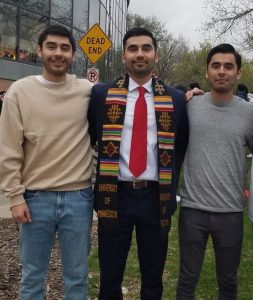
José and his two brothers at his graduation from the university of minnesota
José and his brothers at his graduation (Photo given by José)

After receiving DACA, José enrolled in a technical school program for auto mechanics. He got a job at a small shop during his first year in the program, and then a better job at a car dealership. He switched from technical school to community college, and then to the University of Minnesota, majoring in economics. Along the way, he started working in accounting jobs, and worked in automotive and accounting jobs throughout his college years. José graduated from the University of Minnesota with a degree in economics in December 2018, and now plans to pursue graduate study in economics or statistics.  

José says what he has accomplished or will accomplish is not really the point: he owes a lot to his parents, who brought him to the United States, and to others who have supported him since then. They are his heroes. They are the ones whose stories are most important to him.  

“They are the unsung heroes of what I can accomplish. They live vicariously through me. They’ll never get recognition. What my siblings and I accomplish is their fulfillment.” 

If there is one thing that José hopes people take away from hearing the stories of immigrants like himself, it is this: 

“There are a lot of positive people here. We don’t go around telling our stories because it’s dangerous for us. The news can be distorting when they focus on the negatives.  

It’s important to be more open. More humane. And more caring. Because I think in the end, this country identifies with life, liberty, and the pursuit of happiness, and we are all searching for this.” 

Growing up, José was acutely aware of immigration and the situation at the southern border. As he grew older, he increasingly understood the sacrifices his parents had made to make a life for their family in the United States. He says his parents are selfless, focused completely on the future of their children. They have worked jobs they didn’t like, given up any chance for their own education, and moved far away from other family members. They have not seen siblings, nieces, or nephews in decades. 

 “My parents sacrificed so much for my brothers and me. I’ve been talking about the challenges I have faced here, but their situation is worse than mine. When my mom’s dad died, she was adamant about attending his funeral. At the time, I was old enough to understand what had happened, but not old enough to know the sadness. What I definitely understood, however, was that if my mom went to the funeral, she could probably never come back.”  

 “Mom cried hysterically. She was fixed on going. She hadn’t seen him for a long time. But she didn’t go.”  

“Dad did the same thing when his father died. He decided not to go. And last year Dad’s brother died. Dad hadn’t seen him in over 20 years, but he couldn’t go to the funeral.” 

“My parents haven’t experienced cultural comforts, security in over twenty years.” 

José’s parents filed a family visa petition application in the 1990s. They are still waiting.  

ILCM’s Sara Karki named a 2019 Attorney of the Year by Minnesota Lawyer

sara karki
Sara Karki by Rene Lazaro

Sara Karki hopes that her 2019 Attorney of the Year award will bring greater awareness of the presence of immigrants in greater Minnesota. “There’s a lot of focus on the metro and people have no idea what’s happening in southern Minnesota,” she said. “I hope that people will know that the Immigrant Law Center of Minnesota (ILCM) has an office in Austin and understand that there is work to be done in greater Minnesota.” Of her own work, Sara explained, “It’s not all lawsuits that end up on the front page of the newspaper, we do a lot of work every single day and that counts, too. There are many challenges practicing immigration law right now, and it is nice that the work of our office throughout Minnesota is being highlighted.”

Sara Karki has worked at the Immigrant Law Center of Minnesota (ILCM) for five years and is currently the staff attorney at ILCM’s Austin office. Sara is the chair of the Austin Human Rights Commission is implementing its strategic welcoming plan. Of her work, she said, “You can’t necessarily change federal policy, but you can make sure that your city is doing everything it can be to be welcoming. It has been really cool to see how Austin, Winona, and St Charles are doing that important work on the local level.”

Always interested in law, Sara got her bachelor’s degree at St. Cloud State University in criminal justice. Her interest in immigration law grew out of contact with international students at St Cloud State, as she met people from all over the world and got to know a little about their immigration journeys. 

“I knew I was very interested in immigration, and in law school those were the classes I excelled in and found the most joy in,” Sara said. She had already started volunteering with ILCM prior to beginning law school, and continued to do so as part of a public interest practicum. Though Sara had majored in Spanish, speaking Spanish in a professional context during her volunteer work at ILCM was “eye opening” and prompted her to audit Spanish classes at Hamline while in law school to continue to improve her language skills.

Sara continued to volunteer with legal non-profits until being hired by ILCM to be an attorney in the Worthington, Minnesota office. When the chance to open a new branch of ILCM in Austin, Minnesota arose, she was very excited. Her experience in Worthington was a valuable asset in her ability to open a new office in a new city. “The Austin office has an innovative collaboration of connecting immigrant entrepreneurs with holistic support,” Sara said. “It has been amazing to see the entrepreneurial spirit in action, changing the lives of the participants”

Communities Back Refugees, Reject Fearmongers

Protest signs say refugees are welcome
Refugees welcome

December 13, 2019—We applaud Minnesota Governor Tim Walz’s action in continuing Minnesota’s welcoming tradition for refugees. The Kandiyohi County Board also recently voted to accept refugee resettlement, joining many other communities that have made such formal commitments. So far, no communities have voted to turn away refugees.

President Trump’s September executive order requires states and counties to formally state that they will accept refugees, or be barred from refugee resettlement. Three resettlement agencies, and Attorneys General in several states, including Minnesota, have sued to block the executive order. A preliminary ruling is expected in late January.

“Minnesota, and the United States, have a long commitment to providing safe haven to people fleeing persecution,” said Veena Iyer, executive director of the Immigrant Law Center of Minnesota (ILCM). “Refugees and immigrants make Minnesota a stronger, more prosperous, more vibrant state. This executive order is unnecessary because refugee resettlement agencies already work closely with states and local communities. However, as challenges to the order move through the courts, we encourage Minnesota counties to follow the lead of the state and Kandiyohi County in welcoming refugees. ”

Typically, refugees are resettled in communities where they have family, or where there is already a vibrant local community of immigrants from their homeland, and where they will have opportunities to find employment and housing. Refugees who are settled in one community may move to another: such secondary resettlement is not covered by the executive order.

“The inn is not full for Minnesotans,” Walz wrote in his letter to DHS Secretary Pompeo, citing Minnesota’s proud history of welcoming refugees.

“Refugees strengthen our communities. Bringing new cultures and fresh perspectives, they contribute to the social fabric of our state. Opening businesses and supporting existing ones, they are critical to the success of our economy. Refugees are doctors and bus drivers. They are entrepreneurs and police officers. They are students and teachers. They are our neighbors.”

Refugee resettlement is not a partisan issue. Republican governors in Utah, North Dakota, and Arizona are among those who have already sent in notices saying yes to refugee resettlement in their states.

AAMBP Celebrates Three Years

Since its founding in September 2016, the Austin Area Minority Business Project (AAMBP) has been devoted to reducing legal barriers for immigrant and minority entrepreneurs in Austin, MN. Currently, AAMBP works with around 25 small businesses. The project is a collaboration between the Development Corporation of Austin, the Immigrant Law Center of Minnesota (ILCM), Hispanic Advocacy and Community Empowerment through Research, and the Ballard Spahr pro bono team. AAMBP provides a variety of services including a variety of legal services for both business- and immigration-related needs, education, and longitudinal research and evaluation.


ILCM staff attorney Sara Karki
(Sara Karki by Mon Non for ILCM)

Staff Attorney Sara Karki heads ILCM’s involvement with AAMBP. She has worked with the project since the beginning, as she was already working in ILCM’s Worthington office. Sara believes that many people don’t even know that AAMBP exists, and wants people to know that ILCM is there to help people with both immigration and business matters.

Sara sees AAMBP as an important part of ILCM’s overall mission, and noted, “We don’t just get people legal status. We try to advance good immigration policies, and also to make the lives of immigrant families better.” AAMBP helps promote financial independence and stability for immigrant communities through business ownership. “Immigrants are very entrepreneurial, and have been for centuries,” Sara said.

Many ILCM clients have business ideas and entrepreneurial instincts, and in Austin, AAMBP is there to help them navigate the layers of bureaucracy that may stand in their way. “A lot of business owners don’t realize how much red tape there is,” Sara said, “and Ballard Spahr is able to help them. [Business owners can] have an attorney on their side to help level the playing field, whatever barriers there may be.”

K'Nyaw Grocery Store
(K’Nyaw Grocery (left) by Mari Arneson for ILCM)

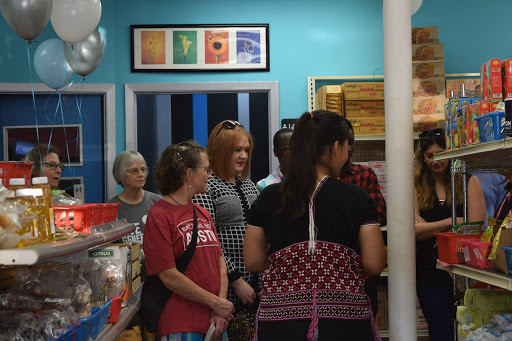
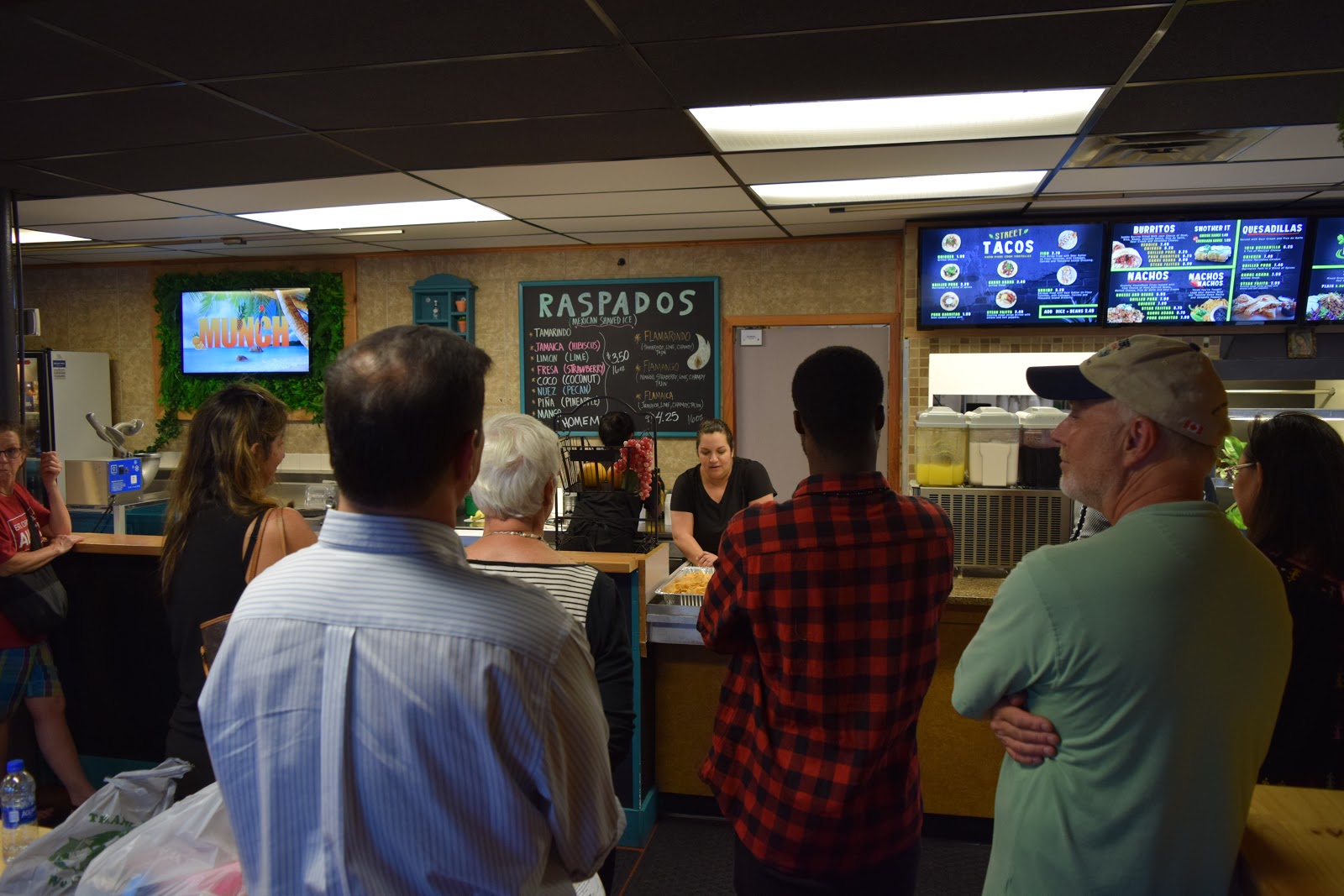
AAMBP celebrated its third anniversary with a tour of three associated businesses: K’Nyaw Grocery (404 1st Street NW), the Sudanese Community International Market (501 1st St NW, pictured above), and 1910 Fresh Mexican Kitchen (507 1st St NW). These three businesses are a testament to the diversity of people and businesses involved with AAMBP. 

Fresh Mexican Restaurant
(Fresh Mexican Kitchen by Mari Arneson for ILCM)

Looking to the future, Sara Karki is interested in exploring other models of economic development. She also hopes to have more bicultural, bilingual staff involved with AAMBP and ILCM in Austin to ensure the needs of immigrant communities are being best met.

“It’s been a pretty cool project,” Sara said, “let’s see how many more people we can help through the next two years and more.”

Tips for Talking About Immigration

talking makes a difference

In this political season, we face the opportunity and challenge of conversations with family and friends about immigration. (And race. And LGBTQ rights. And all the rest of the political issues that divide us.)  

Why Talk?

Should we even go there? Is there any good in talking when we have profound disagreements?

Each person needs to decide what they can handle. No one should be told, ‘You need to do this to save your community.’ We need to respect individual decisions about personal safety and survival.

On the other hand, difficult conversations can have real value. In Real Talk: You Need to Talk to Your Family (Whoever They Are) About Politics at Thanksgiving, Elizabeth Logan wrote:

“This isn’t like a bad boyfriend where we can just stop answering their calls. America can’t break up with itself. We’re in this relationship forever, so even though it hurts, even though it takes forever, even though it’s annoying, I am begging you, before you pass the mashed potatoes: baby, let’s just talk about it.”

Talking Makes a Difference.

Minnesota’s Marriage Equality campaign succeeded in large part because of conversations. Beginning decades before the 2012 vote, OutFront Minnesota trained organizers to engage people with conversations and stories. The conversations worked—not all the time, but enough times to gain majority support for marriage equality.  

How to Talk About Immigration

Dozens of websites and articles offer good and bad advice about how to talk to family about immigration and other political issues.

  • Really listen. This is a conversation, not a lesson or sermon. Care about the person you are talking to.
    • Ask thoughtful questions, inspired by whatever honest curiosity you feel.
    • Try to understand, not convince or persuade.
    • Share personal stories and experiences, not data points.
    • Notice if there are areas of agreement, especially share values. Focus on positives rather than arguing about negatives.
    • Assume good intentions and extend the benefit of the doubt.
    • Thoughtfully end the conversation when you are triggered or tired.
    • Share appreciation for having the conversation.

Some people are not ready for conversation. (Sometimes the person who is not ready is you—especially if you are feeling particularly stressed, hurting, or angry.) Sometimes your best option is just to change the topic, take a break, or go for a walk.  

But what about the lies?  

As satisfying as it feels to pile up fact after fact and denounce the lies spread about immigrants and immigration, that usually is not the most effective strategy.  

“Debunking false information, or contrasting myths with facts, intuitively feels like it should effectively correct myths. But research shows that such correction strategies may actually backfire, by making misinformation seem more familiar and spreading it to new audiences. … 

Repeating a myth may also lead people to overestimate how widely it is accepted in the broader community. The more often we hear a myth, the more we will think it is widely believed. 

Focusing on the positive—personal stories and good information about immigrants—is more effective.   

Want to read more?

Here are links to some websites offering advice on talking to family and friends about immigration and other political issues.


Melissa Pfeiffer Named One of the Top Women in Finance by Finance & Commerce Newspaper

This award recognizes the efforts of 36 women who make notable contributions to their professions and communities. As Associate Director of the Immigrant Law Center of Minnesota (ILCM), Melissa Pfeiffer oversees planning, development, finance, IT, and human resources for the nonprofit legal assistance organization.

Pfeiffer will be recognized at an awards ceremony dinner attended by more than 450 people on Thursday, November 21, 2019 at the Hyatt Regency in Minneapolis.

“I’m honored to be recognized by Finance & Commerce,” said Pfeiffer. “For ILCM, success means serving our clients and the community. In nonprofit organizations, as much as in businesses, responsible management and oversight are crucial to success.”

“We are happy to see Melissa honored for her outstanding work,” said Veena Iyer, executive director of ILCM. “As associate director, her work includes finance and much, much more. She is essential to keeping this organization running and serving the community.”

The Immigrant Law Center of Minnesota (ILCM) is a nonprofit agency that provides immigration legal assistance to low-income immigrants and refugees in Minnesota, with offices in St. Paul, Moorhead, Worthington, and Austin. ILCM also works to educate Minnesota communities and professionals about immigration matters, and advocates for state and federal policies which respect the universal human rights of immigrants. https://ilcm.org

Minneapolis-based Finance & Commerce, which publishes Tuesday through Saturday, focuses on commercial real estate, construction, economic development, regional planning, transportation and transit. Its corresponding website, www.finance-commerce.com, is updated daily with the latest news and data. Finance and Commerce Inc. is also the publisher of twice weekly Minnesota Lawyer. Website: https://finance-commerce.com/

New Fees Create Impossible Bar for Many Immigrants

UPDATED December 7, 2019—In its latest move to keep immigrants out, the Trump administration now plans to increase fees and eliminate fee waivers for most immigration applications. These plans include—for the first time—a fee for asylum. Adding insult to injury, increased fees will help to fund enforcement, rather than being reserved to pay for processing the applications for which the fees are paid.

“Charging a fee to asylum seekers is particularly heinous,” said Veena Iyer, executive director of the Immigrant Law Center of Minnesota (ILCM). “The asylum officer who called this fee ‘blood money’ got it exactly right.”

Benefit Current Fee Proposed Fee Net Difference % Change
Asylum 0 $50 $50 N/A
DACA $495 $765 $270 55%
Lawful Permanent Residence $1,225 $2,195 $970 79%
Naturalization $640 $1,170 $530 83%

Moreover, fee waivers—which have long been accepted and granted for a wide variety of immigration benefits—will be eliminated for all applicants except for five categories of crime, abuse, and trafficking victims protected by specific statutes that USCIS cannot change.

“Working with low-income immigrants every day, ILCM attorneys see their passion for citizenship and the enormous contributions they make to this country,” said Iyer. “These fee increases and the elimination of virtually all fee waivers betray the ideals and values of this country.”

The increased fees were announced last week and published in the Federal Register on November 14, with a 30-day comment period before they go into effect, half the normal comment time. UPDATE: On December 6, the comment period was extended to December 30.

You can resist the fee increase by submitting a public comment to the Federal Register and by contacting your Congressional representatives to ask them to act to preserve fee waivers for all low-income applicants.