Temporary Protected Status (TPS) for Somalia and Yemen Extended, But Not Redesignated – A Life-Threatening Mistake

January 22, 2020 — On January 17, 2020, the Department of Homeland Security (DHS) announced that it will extend, but not redesignate, Temporary Protected Status (TPS) for Somali nationals living in the United States for an additional 18 months through September 17, 2021.

The administration’s decision to extend but not redesignate TPS for Somalia means that only Somali nationals who currently reside in the United States and who already have TPS are eligible for continued protections. Those who have arrived in the United States since 2012 cannot apply for TPS protection.

“Although we are pleased that TPS for Somalia was extended, to not redesignate is a life-threatening mistake,” said Veena Iyer, executive director of the Immigrant Law Center of Minnesota (ILCM). “Redesignation is critical because those who have arrived from Somalia since 2012 have the same need for security and protection from deportation after fleeing dangerous country conditions and one of the worst humanitarian crises in the world.”

Violent conflict continues in Somalia, with al-Shabaab’s almost-daily attacks killing 1,600 people in 2019. Somali-Canadian activist and aid worker Almaas Elman became one of those victims of violence when she was killed in Mogadishu in November.

More than two million Somalis have been displaced from their homes. In addition, as the Department of Homeland Security itself noted in its 2018 extension of TPS:

“Decades of insecurity have devastated Somalia’s physical infrastructure. Humanitarian agencies cite the need for the rehabilitation of crucial infrastructure, including airstrips, roads, and ports.”

Earlier this month, DHS announced that it will extend, but not redesignate, TPS for an additional 18 months for Yemeni nationals living in the United States who already have TPS status, despite the worsening humanitarian situation in Yemen.

One of the reasons for granting TPS is an ongoing armed conflict that poses a serious threat to the personal safety of nationals of the affected country. Somalia’s state of internal war has continued since the United States first designated TPS for Somalia in 1991, and remains an ongoing threat today. Yemen continues in a state of war, which BBC calls “the world’s worst man-made humanitarian disaster.”

The U.S. government deems both Somalia and Yemen too dangerous to travel to for Americans and yet it leaves Somalis and Yemenis stranded by not redesignating TPS.

Minnesota is home to the largest population of Somalis outside of Somalia. They have lived here for decades, working, contributing to their communities, and raising families. Somalis, Yemenis, and others who now have only the tenuous and temporary protection of TPS need the security of a path to permanent legal residence. Congress must act to create a path to permanent legal residence for all people with TPS.

Printable PDF version of this press release.

Welcoming Refugees: The Right and Legal Thing to Do

January 16, 2020—”Refugee resettlement activity should go forward as it developed for … almost 40 years,” wrote U.S. District Judge Peter J. Messitte, in today’s order temporarily halting President Trump’s September executive order. The executive order requires states and counties to formally state that they will accept refugees; otherwise, refugee resettlement in those jurisdictions would be barred.

Three resettlement agencies, and Attorneys General in several states, including Minnesota, sued to block the executive order. Judge Messitte found it likely that the executive order is unlawful, and ordered that it not be enforced while litigation continues.

“The executive order erected an unlawful barrier to refugee resettlement, and unfortunately, in places like Beltrami County, it has resulted in widespread misinformation campaigns about our refugee neighbors,” said Veena Iyer, executive director of the Immigrant Law Center of Minnesota (ILCM). “Judge Messitte’s order allows the continuation of what the judge accurately characterized as ‘the longstanding, carefully crafted humane program that places refugees in communities where they can thrive.”

Refugee resettlement is not a partisan issue. At least 42 state governors, including many Republican governors, said yes to refugee resettlement in their states. At least 20 Minnesota counties have also voted to accept refugees, carrying on our state’s tradition of welcoming individuals and families fleeing persecution.

Printable PDF version of press release.

ILCM Staff Updates

ILCM is excited to welcome 12 new interns and volunteers this month! We also continue our search for two new full-time staff attorneys to join our team.  

Naomi Brim
(Naomi Brim, provided by Naomi Brim)

ILCM welcomes 12 new interns and volunteers this month. Among them: 

Naomi Brim is one of the nine interns assisting with Detainee Legal Assistance calls. A junior at Carleton College, Naomi is studying English with a minor in Women’s and Gender Studies. Her interest in working with individuals in detention began a couple summers ago working in a Senator’s office and she is excited to join ILCM this spring semester.  

Grace Smith joined ILCM as a citizenship intern. She graduated from the University of Northwestern – St. Paul having majored in psychology and minoring in criminal justice.

head shot of grace smith
(Grace Smith provided by Grace Smith)

Grace is passionate about immigration law, refugees, and ensuring that people feel safe and supported. She looks forward to learning more about the Twin Cities immigrant and refugee community, ILCM and the services we provide, and immigration processes like naturalization. Grace will begin studying law at Mitchell Hamline School of Law in the fall.

ILCM is also currently hiring! We are looking for a Spanishspeaking attorney in our Worthington office, and Spanishspeaking attorney to join our Community Defense team in our St. Paul office. We are also searching for a development intern

ILCM also said goodbye to two staff members. We wish them the best on their next adventures. 

Austin’s Future Filmmaker: Sow Reh

Though Sow Reh has never owned his own camera, his greatest passion is photography. His dream is to be a videographer and filmmaker. “I want to travel to beautiful places to take pictures and videos,” he said. “I want to make documentaries about people’s lives, particularly Karenni people.”

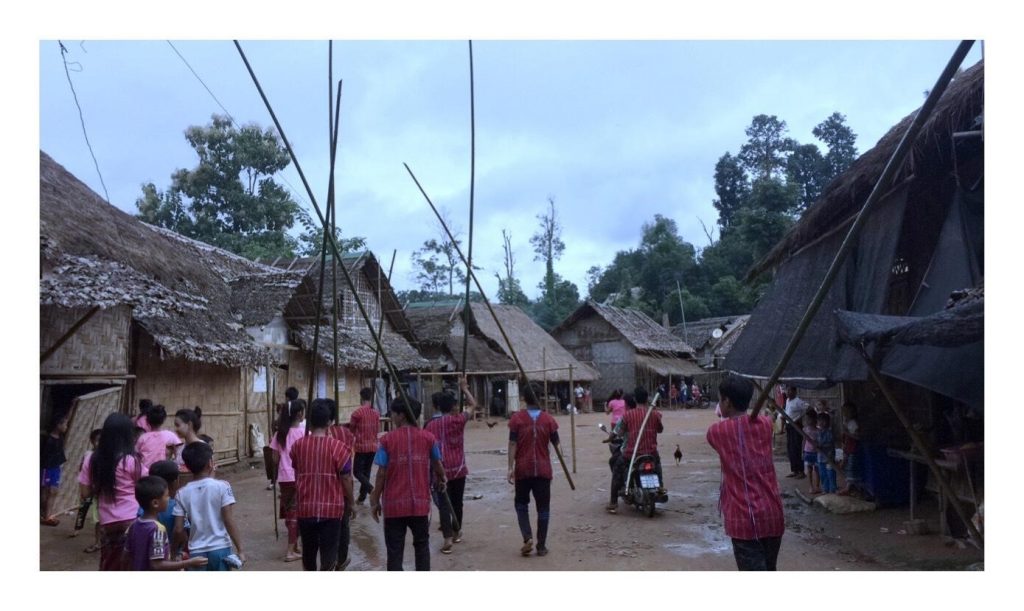
Sow Reh has borrowed cameras from nonprofits and friends, has rented one from the Karenni news station KT (Kantarawaddy Times), and has used iPhones for photography, as in the photo below.

“I made do with what I had,” he said, adding that he hopes to eventually get a DSLR camera, and would also like a drone camera to take different kinds of landscape pictures. Landscape and nature photography are particularly compelling to Sow Reh. He hopes to one day travel to Arizona and California because the landscapes in those states remind him of where he lived as a child. “Growing up in the woods, I loved to go to the mountains and rivers near my house,” he said.

Karenni refugee camp people walking down a road
(Karenni Refugee Camp by Sow Reh)

Sow Reh is multi-talented: his YouTube channel showcases both his video and music skills, and he has also done some acting, starring in the music video for Khu David Brown’s “Why you hate me?”

In addition to these creative endeavors, Sow Reh takes IT and computer classes at Riverland Community College and is the media manager for a local soccer team. He is enthusiastic about soccer, often traveling to St Paul for Minnesota United games. He’s a fan of the team and loves to watch a good game.

Sow Reh also volunteers with the Welcome Center in Austin, happily doing photography for events, like Karenni National Day, and whenever he’s needed. He first connected with the Immigrant Law Center of Minnesota (ILCM) through his involvement with the Welcome Center

Sow Reh came to the United States from a Karenni refugee camp in Thailand in March 2018, after three years of working to get approved through refugee resettlement. “The process started with an application,” Sow Reh said, counting on his fingers. “If you were accepted, then you were called for an interview with the Thai government. After that, the U.S. Department of Homeland Security (DHS) interviewed you. If you passed all these interviews, then you were given a medical exam. Throughout the process, there was always the chance that something would not work out and I would have to start all over again. Luckily, I made it through each step. I’m really thankful for this.”

Before leaving Thailand, there was a week of cultural orientation. During the week, they learned about the day-to-day life of people in the United States. Sow Reh learned about the American education system, retirement, how to stay safe in cases of emergencies, how to use stove tops, the laws of the United States and what happens if you commit a crime, and how to eat American food. He laughed as he remembered the lesson on peanut butter and jelly sandwiches. “It’s just bread with peanut butter and jelly in it… and it’s a meal here!”

“When I left Thailand, I already knew I was coming to Austin,” he said. He came knowing he had relatives, friends, and Karenni community to look forward to there. “It’s a small town, but there are a lot of great resources,” he said of Austin, and added: “There is community everywhere.” The rest of Sow Reh’s family was able to come to the United States with him, and now they are together in Austin.

“We came here to get an education, to have a better future for us and for our kids and grandkids, and hopefully to use that knowledge to give back to the community both here and back home,” he said. Sow Reh envisions a long future for himself and his family in the United States.

Yes, You Can—Comment on Anti-Asylum Rule

Just before the holidays, the Trump administration quietly introduced a proposed rule change that would hurt many asylum seekers.  The rule change would exclude many asylum seekers based on future contact with the U.S.’s flawed criminal legal system.

With just a few minutes of your time, you can act to oppose this regulation.

Thanks to the National Immigrant Justice Center for sharing how-to-comment information.

This proposed regulation would put asylum-seekers at risk of danger—even death. Under this rule change, people who have endured mistreatment and profiling in the U.S. criminal justice system would be punished a second time, with deportation back to the very life-threatening situation they fled. And judges would be powerless to help.

You can find more detailed background on the proposed rule here, along with an additional template laying out detailed legal objections to the proposed regulation. But you do not have to be a lawyer or expert to comment. You can comment today, in just a few minutes. The administration is required to review all comments  submitted by January 21, 2020.

How to take action!

You can write a few sentences or a few pages. Then click here for the official page where the federal government is accepting public comment and paste in your comment. If you would like some help getting started, here are some suggestions:

1) Start by simply stating your opposition to the rule change:

I write to express my strong opposition to this proposed rule change.

2) Personalize your comment. Include stories if you can. Some examples:

  • I am a concerned member of the public who believes strongly that our nation must welcome people fleeing violence, and who is strongly concerned about racial profiling in the criminal legal system. Immigrants are a vital part of my community, my neighborhood, and my state.
  • As an immigrant from XX who has lived in the U.S. for XX years, I am deeply concerned that this rule change would send people who fled violence back to danger and death.
  • As a formerly incarcerated person, I think it’s wrong to punish people a second time after they’ve completed their sentences. Deportation is often a matter of life and death.
  • As [title] at [org], I work with immigrant community members daily, and am concerned this rule would put many people in danger.

3) Explain values that are the basis for your opposition. Some examples:

  • Our values call for the U.S. to be a place of refuge for people fleeing violence, starvation, poverty, or persecution. 
  • The criminal legal system in the U.S. is wracked with racial profiling and obstacles to equal justice.  Our harsh immigration laws exploit these obstacles to drive mass incarceration and mass deportation of people of color.  
  • This proposed rule would inject racial profiling into the asylum process. This latest attack would put even more people seeking asylum at risk of danger – and death. This would in turn eviscerate one of the most important defenses community members have against deportation. 
  • I believe we must recognize the humanity of every person, including immigrants, and protect our neighbors from discrimination and abuse. Our immigration and asylum policies must honor our ideals of compassion, fairness, and respect for human rights – not trample them.

4) Close by restating your opposition to the rule change:

For these reasons, I call upon the Trump administration to withdraw this proposal.

Ready, set, GO!

Click here for the official page where the federal government is accepting public comment. Paste your comment in the box on the federal government’s website, enter your personal information (if you’re able to – you can also submit anonymously), and submit!

Fact Sheet: Liberian Refugee Immigration Fairness Act

UPDATE 12/31/2020: The filing period for certain Liberian nationals and certain family members to apply for adjustment of status under the Liberian Refugee Immigration Fairness (LRIF) provision has been extended from one year to two years. If you are applying to adjust status based on LRIF, you must properly file Form I-485, Application to Register Permanent Residence or Adjust Status, and USCIS must receive it by December 20, 2021, two years from the date of enactment of the National Defense Authorization Act of Fiscal Year 2020 (PDF).

For more information, see Sec. 901 of the Consolidated Appropriations Act, 2021 (PDF), Extension of Period for Adjustment of Status for Certain Liberian Nationals.

ILCM recommends that all Liberians who believe they are eligible for a green card under LRIFA to consult with a qualified attorney before submitting an application. ILCM is handling cases of Liberians in Minnesota who are eligible for our services. Please call our priority intake line, 651-641-1011, to schedule an appointment on Mondays, Tuesdays, and Wednesdays from 9-11 a.m. and 2-4 p.m. or Thursdays from 1-4 p.m.

Fact sheet from Black Immigrant Collective and The Advocates for Human Rights. Downloadable PDF of LRIFA Factsheet. This PDF is up to date as of 12/31/2019 and does not contain information on the 12/31/2020 extension.

Frequently Asked Questions

What is the Liberian Refugee Immigration Fairness Act?

The Liberian Refugee Immigration Fairness Act (LRIFA) is a special law that allows Liberian nationals who have lived in the United States since November 20, 2014 to apply for lawful permanent resident status (green card).

Who is eligible?

(a) Any Liberian national who has been continuously present in the United States during the period beginning November 20, 2014 and the date on which the application under LRIFA is filed or
(b) The spouse, child, or unmarried son or daughter of a person described in (a).

When can I file my application?

USCIS announced that it has begun accepting LRIFA applications as of December 26, 2019.

ALL APPLICATIONS MUST BE FILED WITHIN 2 YEARS OF THE DATE OF LRIFA’S ENACTMENT or by DECEMBER 20, 2021.

I was on Ebola TPS. Am I eligible?

Any Liberian who has been continuously present in the United States during the period beginning November 20, 2014 and the date you file your application is eligible.

I have DED or DACA or am on a valid non-immigrant visa (F-1, H-1B, etc.) right now. Am I eligible?

Any Liberian who has been continuously present in the United States during the period beginning November 20, 2014 and the date you file your application is eligible.

I’m not on DED now. I never had TPS. Am I eligible?

Any Liberian who has been continuously present in the United States during the period beginning November 20, 2014 and the date you file your application is eligible.

I have traveled outside the United States. Will I still be eligible?

Possibly. You must have been “continuously present” in the United States between November 20, 2014 and the date you apply under LRIFA. You have been “continuously present” even if you have made a few short trips outside the United States. If your trips add up to more than 180 days outside the United States you will not be eligible.

Can I travel now?

The LRIFA does not give you permission to come into the country. If you leave, you may not be able to return. Check with an immigration lawyer before leaving the United States.

I have a criminal history. Will I still be eligible?

Possibly, but you should check with an immigration lawyer before filing any papers.

You will not be eligible if you have been convicted of any aggravated felony or two or more crimes involving moral turpitude.

I took part in the Liberian civil war. Will I be eligible?

Possibly, but you should check with an immigration lawyer before filing any papers.

The LRIFA says that anyone who has ordered, incited, assisted, or otherwise participated in the persecution of any person on account of race, religion, nationality, membership in a particular social group, or political opinion is not eligible for a green card under the LRIFA.

I have a final order of deportation. What do I need to do?

The LIRFA is clear that DHS must establish a process to “stay” (stop) any LIRFA applicant’s removal order while the application is pending. That means that once you file your LIRFA application, you cannot be deported unless your LIRFA application is denied.

If you were ordered deported because your asylum application was denied, you overstayed your visa, you did not renew your DED or TPS, for other reasons besides a criminal conviction, you should be eligible under the LRIFA. You will not need to file a motion to reopen. If you were ordered deported because of a criminal conviction, you might not be eligible. Talk to an immigration lawyer before you file anything.

I am in detention with a final order of deportation. What should I do?

We do not expect ICE to attempt to deport people who are eligible for LIRFA. Liberians in detention who may be eligible for LIRFA should:

  • Tell your detention officer that you intend to apply for LIRFA.
  • Contact your immigration attorney to make a plan for filing the application as soon as possible. If you do not have an immigration attorney, contact the free legal service providers who work at your detention center or call 612-341-9845.

Make sure a trusted family member or friend knows where you are. They can check the ICE Online Detainee Locator with your full name and date of birth or A-number.

I do not have a work permit right now. Can I work under LRIFA?

Once you file your LRIFA application you will be able to apply for employment authorization. DHS may issue you a work permit right away. If your LRIFA application for adjustment of status is pending for a period exceeding 180 days and has not been denied, DHS must authorize employment.

How can I get ready to file my LRIFA application?

  • Save money. You will need to pay the filing fee and a biometrics fee. At this time the fee is $1,225 for an adult, and the fees are scheduled to increase. You will also need an immigration medical exam, which may not be covered by insurance.
  • Gather proof of continuous presence. You will need to show that you have been “continuously present” in the United States as of November 20, 2014. USCIS will provide more instructions about what you will need, but you will likely need copies of some documents like pay stubs, leases, or other records showing you were in the United States. If you traveled outside the United States, you will need to calculate the exact number of days you were outside the country.
  • Make a list of your addresses and your employers from the last 5 years. The application form asks for this information.
  • If you ever filed for asylum, get a copy of that application and have an immigration lawyer review it before you file.


Do I need a lawyer?

You should talk with an experienced immigration lawyer or BIA accredited representative if you have any questions about how to file your application or whether you are eligible for LRIFA adjustment. Every case is different, so do not rely on advice given to someone else – get your own answers!

Criminal convictions may affect your eligibility for LRIFA adjustment.
Talk to a lawyer before you file.

What you said in your asylum application may affect your eligibility for LRIFA adjustment. Talk to a lawyer before your file.
You can hire a lawyer to prepare and file your application and help respond to any questions from USCIS. You can also consult with a lawyer to answer questions. Different lawyers charge different fees. Ask about fees before you agree to have the lawyer represent you. Ask whether they charge a flat fee or charge by the hour. Ask about payment plan options. Always get a fee agreement (sometimes called a retainer agreement) in writing. Take time to review it before signing. You can find immigration lawyers at www.ailalawyer.com

Free legal services may be available if you have a low income. You can find free and low-cost legal services at www.immigrationlawhelp.org. Watch for community legal advice clinics near you.

*ILCM recommends that all Liberians who believe they are eligible for a green card under LRIFA to consult with a qualified attorney before submitting an application. ILCM is handling cases of Liberians in Minnesota who are eligible for our services. Please call our priority intake line, 651-641-1011, to schedule an appointment on Mondays, Tuesdays, and Wednesdays from 9-11 a.m. and 2-4 p.m. or Thursdays from 1-4 p.m.*

LRIFA Application Information

https://www.uscis.gov/i-485

Special Instructions

Adjustment of Status for Liberian Nationals and Certain Family Members

Sec. 7611. Liberian Refugee Immigration Fairness, pages 1112-1115 of the National Defense Authorization Act (PDF), allows eligible Liberian nationals and certain family members to adjust status. For more information about LRIF eligibility and evidentiary requirements, see the LRIF program page.

On your Form I-485, in Part 2, you must choose “Other Eligibility” under Item Number 1.g. In the text box, write “LRIF” to indicate you are applying to adjust status based on Liberian Refugee Immigration Fairness.

Note: You may file Form I-765, Application for Employment Authorization, with your Form I-485 or while it is pending. If you file Form I-765, write “(c)(9)” as your eligibility category for Part 2, Item Number 27 on your Form I-765.


Form version

Applicants must complete Form I-485. Make sure to use the right version of the form. Go to https://www.uscis.gov/i-485 for the current application form.
 

Form instructions

Download form instructions at https://www.uscis.gov/i-485. Read the instructions carefully to find the list of required documents you need to include with your application.
Filing fee Fees vary depending on your age. Check https://www.uscis.gov for current fees.
Filing location  
If you live in: Alabama, Arkansas, Connecticut, Delaware, District of Columbia, Florida, Georgia, Kentucky, Louisiana, Maine, Maryland, Massachusetts, Mississippi, New Hampshire, New Jersey, New Mexico, New York, North Carolina, Pennsylvania, Puerto Rico, Rhode Island, South Carolina, Oklahoma, Tennessee, Texas, Vermont, Virginia, U.S. Virgin Islands, or West Virginia, file at: USCIS Dallas Lockbox

For U.S. Postal Service (USPS):

USCIS

PO Box 660867

Dallas, TX 75266

For FedEx, UPS, and DHL deliveries:

USCIS

Attn: NFB AOS

2501 S. State Hwy, 121 Business

Suite 400

Lewisville, TX 75067

If you live in: Alaska, Arizona, California, Colorado, Hawaii, Idaho, Illinois, Indiana, Iowa, Kansas, Michigan, Minnesota, Missouri, Montana, Nebraska, Nevada, North Dakota, Ohio, Oregon, South Dakota, Utah, Washington, Wisconsin, Wyoming, Guam or the Commonwealth of the Northern Mariana Islands, file at: USCIS Phoenix Lockbox

For U.S. Postal Service (USPS):

USCIS

PO Box 21281

Phoenix, AZ 85036

For FedEx, UPS, and DHL deliveries:

USCIS

Attn: NFB AOS

1820 E. Skyharbor Circle S

Suite 100

Phoenix, AZ 85034

Downloadable PDF 

Fact sheet from of Black Immigrant Collective and The Advocates for Human Rights.

Black Immigrant Collective logothe advocates for human rights logo