
Soccer? You betcha!

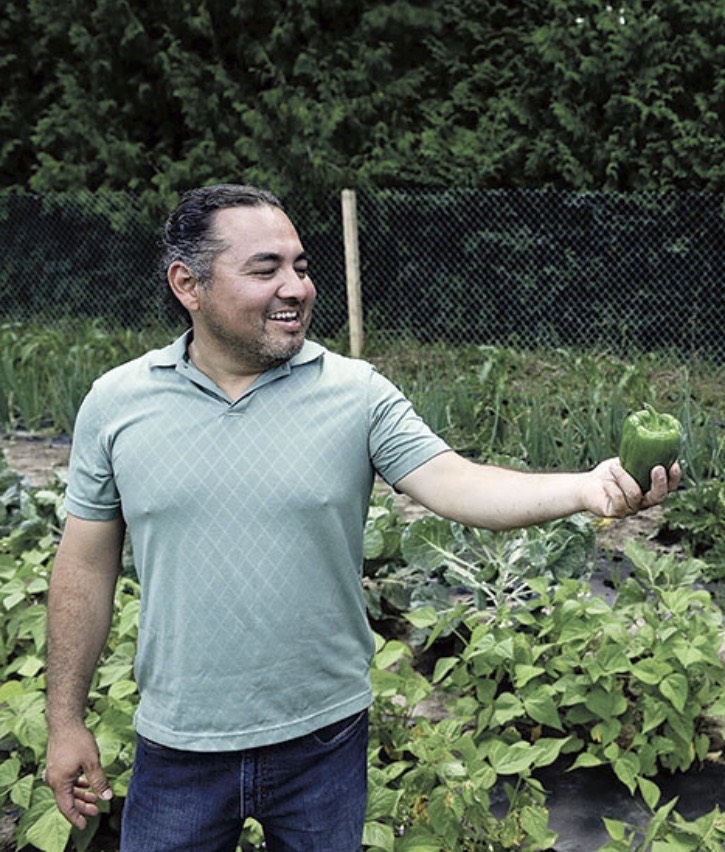
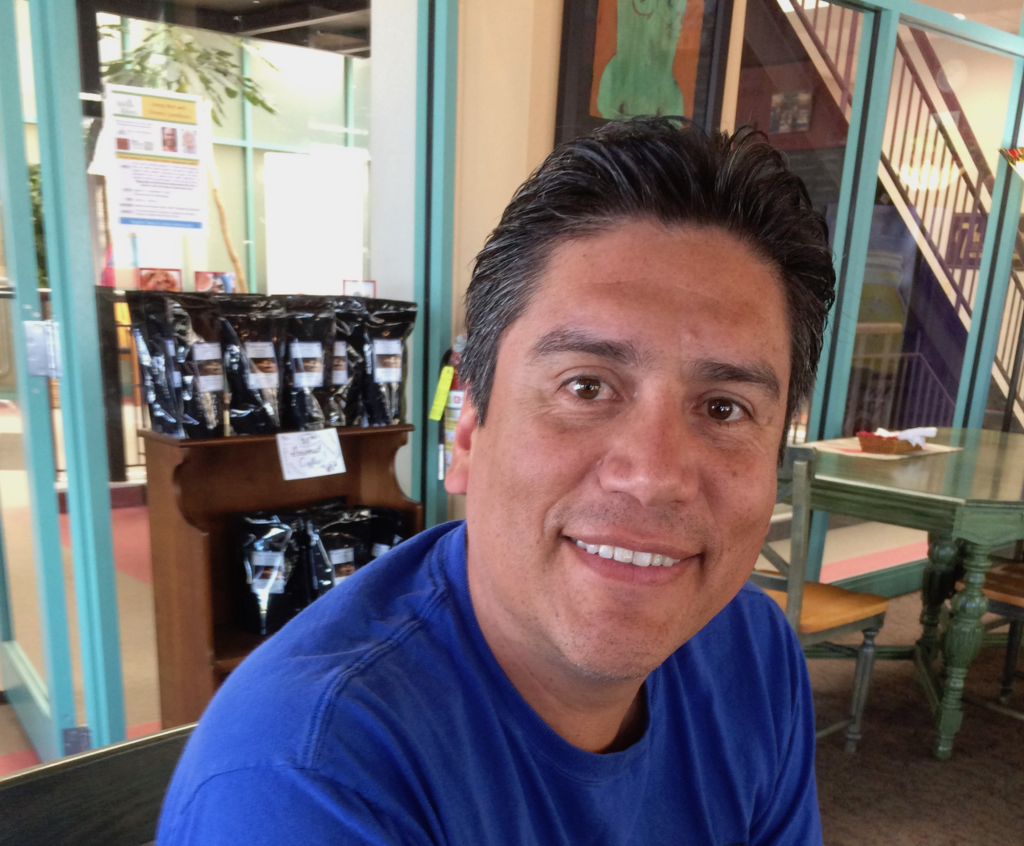
Edel Fernandez (Photo by ILCM)

When Edel Fernandez arrived in Minnesota, he came with a college degree and work experience. According to the Pew Research Center, that puts him among the 21st century immigrants, who are “the most highly educated in history.” New immigrants today are more likely to have college degrees than people born in the United States.

In the 1990s, Fernandez was working in a university in Guanajuato, Mexico. That’s when he met a foreign exchange student who stayed with his parents, a college student from Minnesota. “Katie was convinced she needed to bring back a souvenir,” he jokes, “and that’s why I am here!”

When he moved to the United States in 2000, he went to an employment agency to look for work. “After they looked at my resume and noticed that I was fluent in English, they hired me,” he recalls. His English was very good, he says, but “I had to work on my uff da and you betchas!”

Soon he was recruited away from his first job by the WorkForce Center in Willmar. After a while, he “got promoted from employment coordinator to migrant labor representative.” That seemed a strange choice, since the city he comes from is three or four times the size of Boston, and he had no experience with either agriculture or migrant labor.

“I think I got it by default because I looked to them like a migrant farmworker,” he says. Nonetheless, his work made the Willmar office number one in the state for matching jobs with people, and “they sent people from Chicago to audit us because they couldn’t believe our success rates.”

Still, he missed working in a university setting. When Ridgewater Community College started a soccer program, he saw a chance to combine his passion for soccer with a connection back to higher education. Coaching took him from Willmar’s Ridgewater to Austin’s Riverland, where he now combines soccer coaching with advising students in programs that include Cycles for Success and the Be Your Best Summer Academy.

“We have seen a 94 percent success rate over 11 years in the summer academy,” he says proudly. That means students ages 16-22 successfully completing the program and going back to high school or on to college in the fall.

Soccer remains his passion, whether playing, coaching, refereeing, or watching. His team at Riverland has international students from around the world, Chile to Montenegro. Last year the team made the play-offs for the regional championship, placing second in Region 13 of the National Junior College Athletic Association.

He lives in Owatonna with his wife, who teaches in middle school there, and their “three beautiful daughters,” ages six to 13. “It has been very eye opening to raise three bicultural girls,” he says. “Unfortunately, because of the political world we live in, we have been exposed to many things that I don’t wish my kids were experiencing.”

Edel misses his parents and brother, who live in Mexico — “I’m the only crazy one who lives in this winter wonderland” — but the family has visited Mexico often.

“I have always thought you become what you are surrounded by,” Edel says, and he loves the energy of the young people he works with every day.
 

Solomon Paul welcomes immigrants to Austin

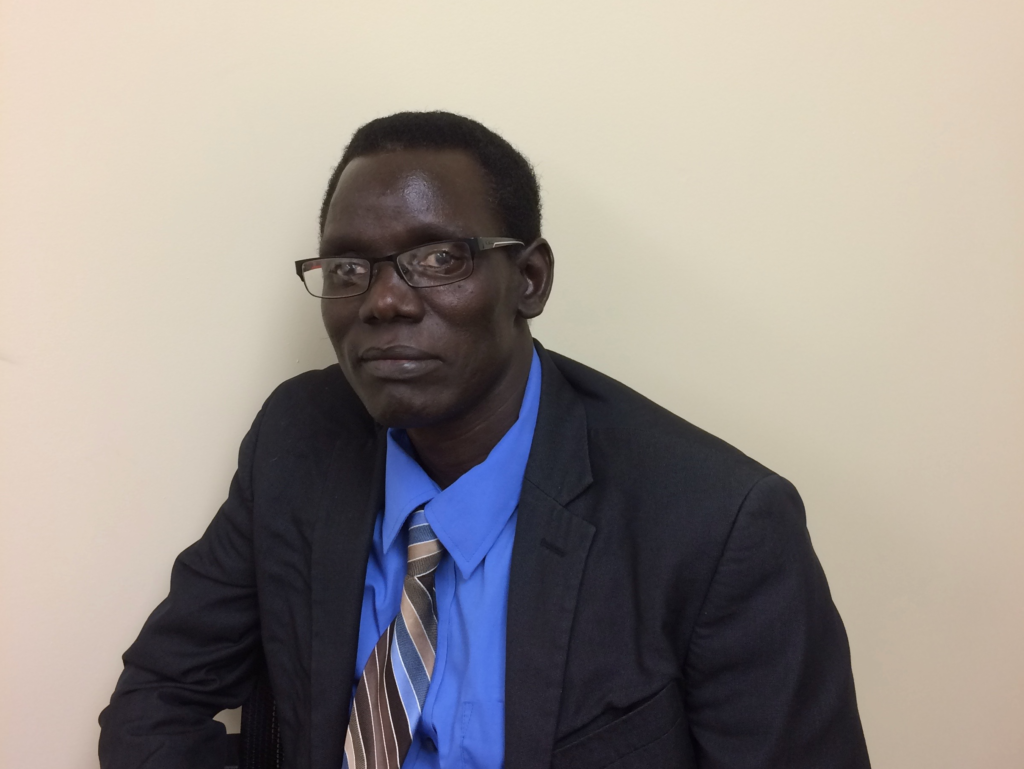
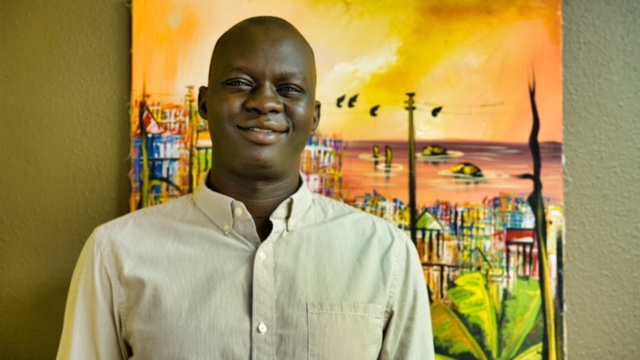
Solomon Paul (Photo by Prashant Karki)

Since he arrived in 2005, Solomon Paul has seen Austin’s population grow and change. Back then, the two biggest immigrant groups were Latin Americans and African immigrants, like himself, from Sudan. Today, he says, “the Asian community has surpassed the African population in Austin, because of the influx of Karen and Karennis from out of state and from St. Paul – from as far as North Carolina, Iowa, Colorado, Texas, and Illinois.” The Karen and Karenni immigrants fled Burma, lived for years or decades in refugee camps in Thailand, went through extensive and prolonged vetting by the U.S. government, and then were resettled in various U.S. cities.

Paul himself came to the United States as a refugee from Sudan in 1999, settling first in Houston, Texas and relocating to Portland, Maine. He moved to Minnesota with his wife and three children in 2005, partly to be close to the Mayo Clinic and partly because there was already a Sudanese refugee population in this part of the state. He worked in Albert Lea at Good Samaritan nursing home, went to school at Winona State University and worked in a group home there, and worked as a court interpreter all over Minnesota and also in Iowa, South Dakota, and as far away as Illinois. Now he is the executive director of Austin’s Welcome Center.

Austin is a place for secondary resettlement. That means immigrants who come to Austin usually come from some other city in the United States where they settled first. Those who have now come to Austin came for jobs, Paul says. With an unemployment rate hovering around two percent, Austin needs workers, and immigrants come for jobs.

Often the husbands come first, Paul says. “After he finds the place welcoming enough to bring children here, then he brings the entire family.” What makes the city welcoming? It’s little things, Paul explains – like finding an interpreter for visits to the doctor’s office or school. Language and housing are the two biggest challenges for immigrants moving to Austin.

The Welcome Center helps all of these new residents settle, assimilate and become part of the community. “When they find a supporting cast of staff at the Welcome Center,” he says, “then they know this is where they want to raise a family.”

“Austin today is not the same Austin that I came to,” Paul says. “Back then I would see apprehension in the faces of local people. You would go to some business areas here and you would feel that you are not welcome. You would see that apprehension.” Today, he says, Austin “has changed ten-fold for the better.”

Mower County’s immigrant population has grown to more than 11 percent over the past 25 years, turning around its decades-long population decline. Austin’s immigrants are diverse: they come from Mexico, Burma, Sudan, Ethiopia, Togo, the Ivory Coast, Benin, Liberia, and many other countries around the world. The largest part of Austin’s immigrant population is Latino, with Asians edging out Africans for second place.

Paul thinks they made a good choice, saying that Austin is a good place to live. “St. Paul is confusing – here it is easier,” he says with a smile. He’s doing his part to make Austin a more welcoming community for everyone.

Farming runs in the family at La Sureña

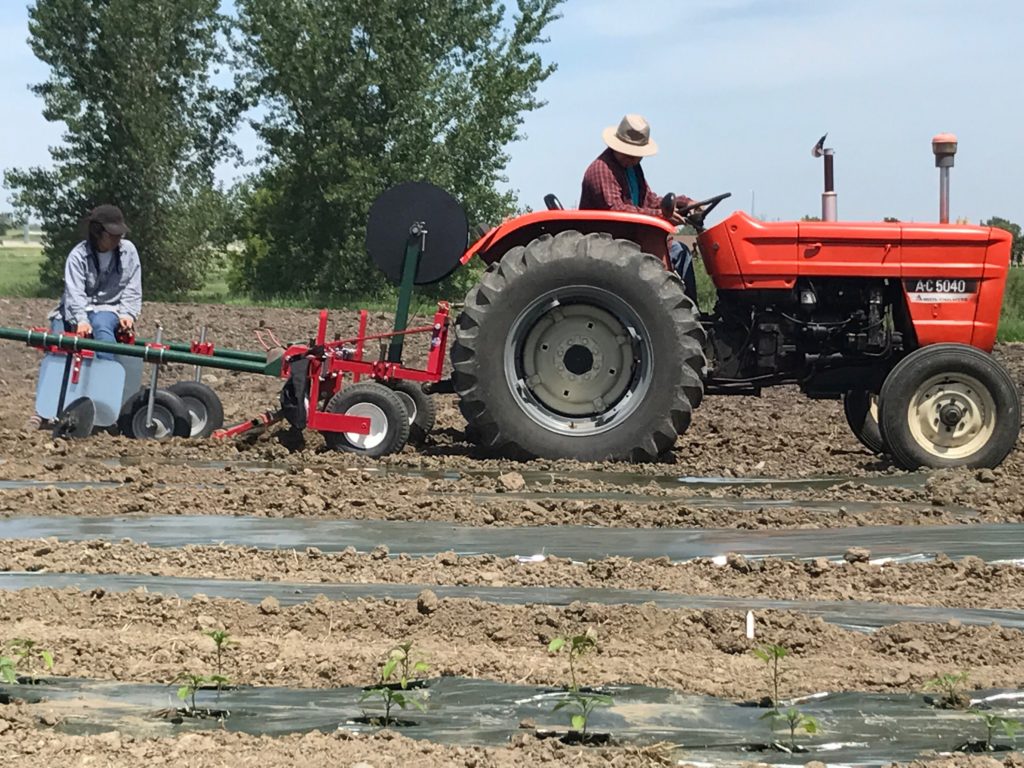
Photos courtesy of La Sureña farmers.

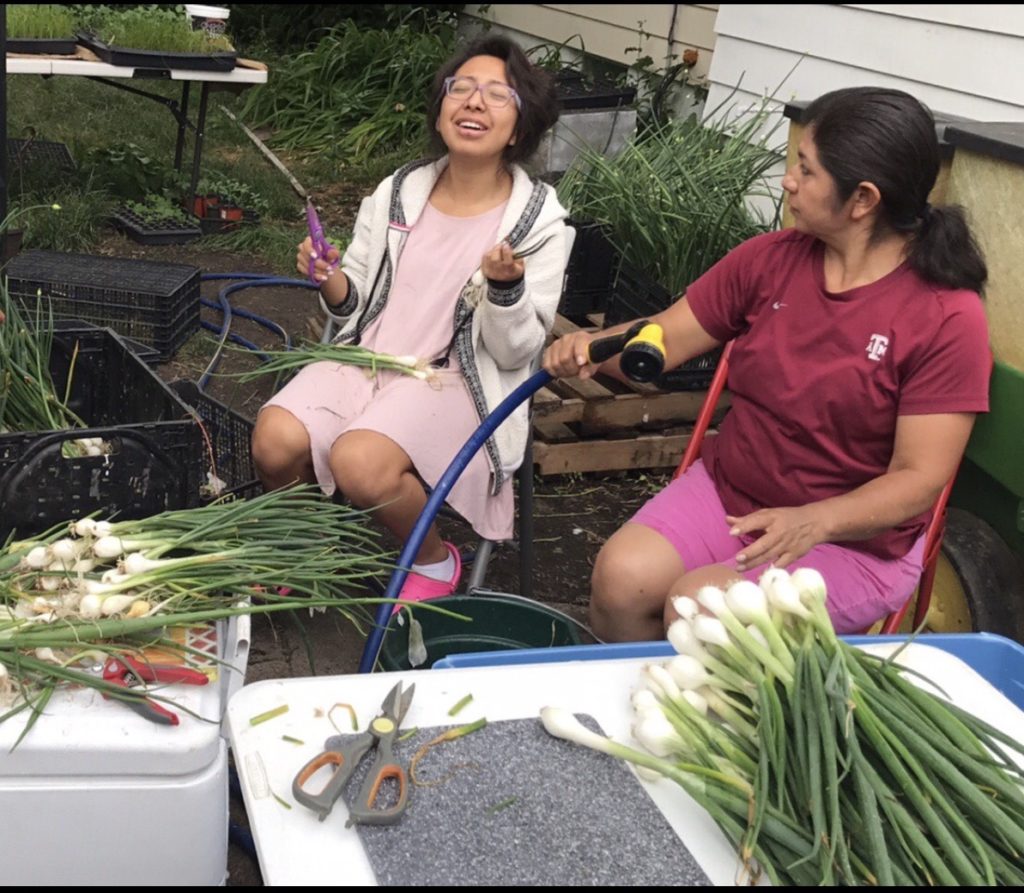
“I always loved farming,” Cira Paz Valbuena declares. “All my life, I was used to eating fresh vegetables.” She grew up in Mexico, where her family raised their own food. Now an Austin resident, she returned to growing food for the family here.

About 16 years ago, when her daughter enrolled in preschool and she began taking English classes, Cira heard about the garden plots next to Woodson. She signed up right away. While she started out growing food for the family, she couldn’t stop there.

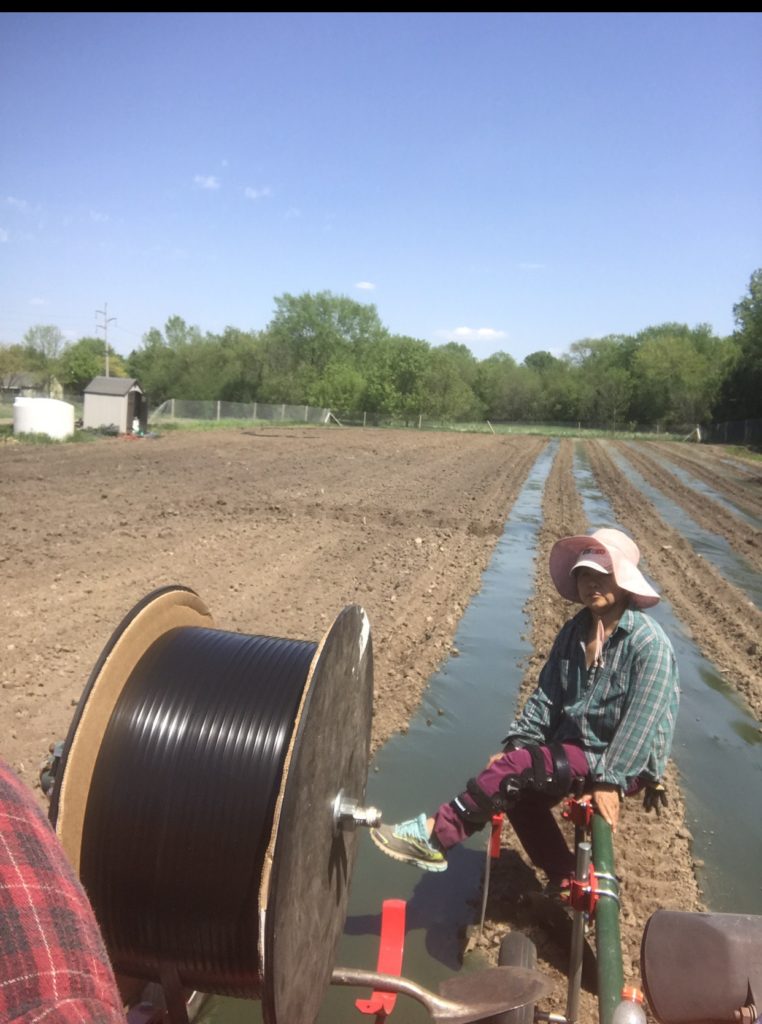
Photos courtesy of La Sureña farmers.

“We were a family of four, but she raised enough food for 20,” recalls one family member. Four or five years ago, Cira saw a notice about learning to raise food for sale to others. She was ready.

The whole family joined in the new farm project. Since then, their 0.8 acre plot has expanded to include almost seven acres in two different locations.

They are growing on only three of the seven acres, Martin says. Even with a tractor, growing fresh vegetables is labor intensive and time-consuming.

Photos courtesy of La Sureña farmers.

“Summer doesn’t wait,” Cira says. “It is heavy work, and you have to like what you are doing to do it well. Hard work doesn’t scare us away.” She adds, teasing, “Except for Julieta!”

She and Julieta both laugh. The whole family – Julieta and her brother, stepfather Guillermo Martin, and Cira’s parents – now work with Cira in the small farming operation they named La Sureña.

Their crops include green beans, jalapeño peppers, roma tomatoes, bell peppers, cilantro, tomatillos, cucumbers, and dragon tongue beans. In Austin, HyVee is one of La Sureña’s customers, along with some local restaurants and families.

Martin still works full-time off the farm, at International Paper. Growing up in Texas, he had “no farming background, and farming was the last thing I ever thought of doing.” He prefers dealing with “paperwork, certifications, all that stuff.”

Martin credits the Latino Economic Development Corporation (LEDC) and the Austin Area Minority Business Project for guiding him through the maze of regulations and procedures necessary for farmers who grow vegetables for the commercial market. Some rules seem obvious: washing produce before sale, keeping records of any fertilizers or herbicides used. Some are less obvious: “If an animal goes into the field,” he explains, “you have to find where he came in and try to close that spot.” He also keeps records to assess which plants and varieties produce the biggest harvests and the highest return on investment.

Photos courtesy of La Sureña farmers.


La Sureña is one of eight member farms in the Shared Ground cooperative, which helps to market the produce they grow. Besides marketing to stores and restaurants, Shared Ground sells Community Supported Agriculture (CSA) shares. Someone who buys a CSA share gets a weekly box of fresh produce during the season.

Shared Ground and LEDC open new horizons through classes and workshops on topics such as high tunnels, irrigation lines, pollination and cover crops. La Sureña is using a mixture of oats and wheat as a cover crop to improve the soil.

Thinking about the future, Cira says she would like to own land instead of renting, and to have all of the land in one place so they don’t have to travel back and forth from one plot to another. Maybe some chickens, she says, and “maybe a pony for Julieta.”

Julieta represents the youngest generation in the family farming operation. While her mother and grandparents came from the state of Guerrero in Mexico, Julieta grew up in Austin, and likes the diversity of the community. She fits in work in the fields around her other two summer jobs at Subway and the Assisted Living Center. During the school year, she’s away from home, a junior at Knox College in Illinois.

When Julieta thinks about the future of the family’s farming, she sees getting more land, having a more organized operation, and maybe expanding deliveries. Apart from that, she says, it would be good to get more involved in the community and “maybe to have classes to teach people about food. Food brings people together.”


DACA ending, battle for DREAMers moves to Congress

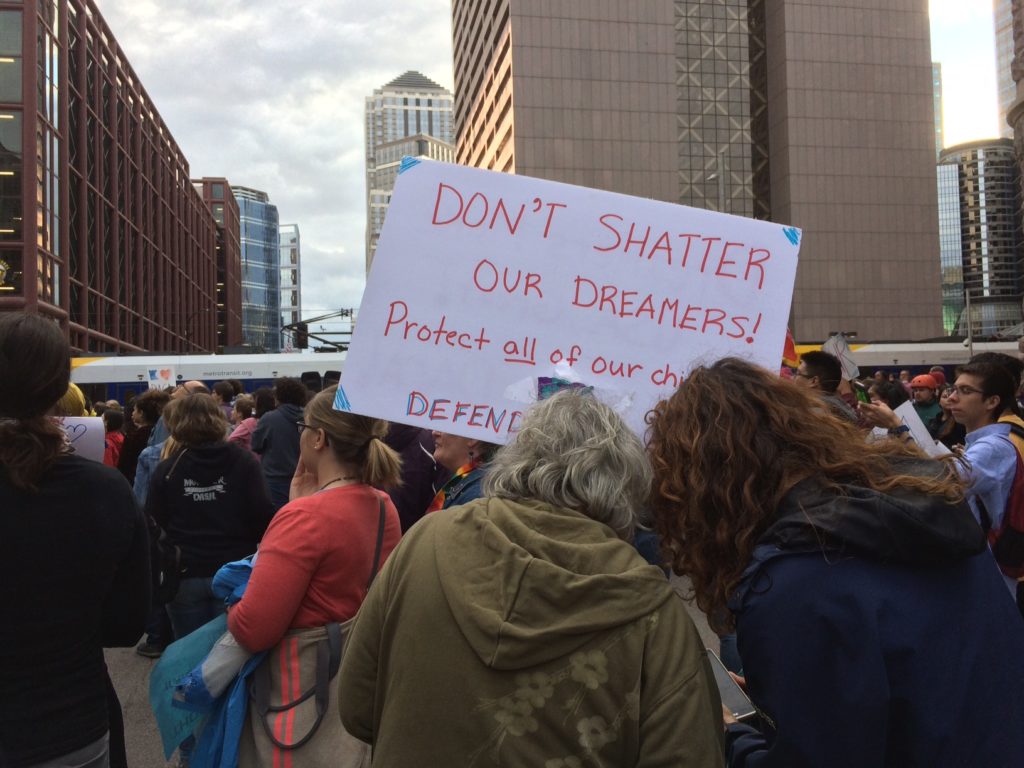
Photo from Minneapolis rally on September 5, following Sessions announcement.

On September 5, Attorney General Jeff Sessions announced an end to DACA, turning away more than 800,000 young immigrants. Besides the blow to Minnesota and the United States, ending DACA threatens to send young people back to countries they barely know, uprooting them from families, children and the communities in which they grew up.

In Minnesota alone, Trump’s order devastates more than 6,200 young people – all of whom have or will have a high school diploma, are in or graduated from college, or are working in jobs that pay them better because they have DACA. All of them arrived in this country at age 15 or younger and consider Minnesota their home. ILCM and NavigateMN programs have worked together to support and assist thousands of DACA applicants between the ages of 15 and 35 from every Congressional District and from dozens of countries.

The state of Minnesota is currently experiencing historic waves of older workers leaving the workforce. According to the Humphrey Institute and Greater MSP’s January 23, 2017 report, Minnesota needs to expand the rate of immigration to Minnesota four and one-half times to maintain our current economic standard of living.

Minnesotans with DACA pay $15 million in state and local taxes. According to the Center for American Progress, ending DACA would cost Minnesota more than $367 million in annual GDP losses. Nationally, the loss of DACA would cost the country $460 billion over the next decade. Even the conservative CATO institute supports continuing DACA and warns of a loss of almost $350 billion over the next decade if DACA is ended.

Americans want these young Dreamers to stay. National polls of registered voters show 78 percent of voters support giving DREAMers a chance to stay permanently, including 73 percent of Trump voters. Businesses in Minnesota and nationally also support permanent protection for DREAMers including Best Buy, Microsoft, Apple, Amazon, General Motors, Google, Starbucks and Visa among many others.

The Trump administration’s abolition of DACA will begin taking away status from DACA recipients as soon as early March 2018, making them vulnerable to deportation. Congress has an opportunity to reverse this decision, and offer permanent protection to the DREAMers. DREAM Act bills with bipartisan sponsorship have been introduced in both the House and Senate.

Minnesota’s Congressional delegation can lead the way by showing bipartisan unity in demonstrating leadership to pass permanent protection for our DREAMers. The delegation is split, mostly along partisan lines – Supporting DACA and Dreamers, opposing Trump decision: DFL Senators Al Franken and Amy Klobuchar, DFL Congressmembers Keith Ellison, Betty McCollum, Tim Walz, Collin Peterson and Rick Nolan all support DACA and Dreamers. Republican Congressmenbers Tom Emmer and Jason Lewis support the administration’s action to abolish DACA. Republican Congressman Erik Paulsen falls somewhere in the middle, saying he supports DREAMers, but not clearly supporting the DREAM Act.

We urge every person, business, faith community, school, and organization who cares about these young people – and who cares about what they bring to our state and nation – to contact your Congressional representatives and demand that they pass the Dream Act before then, and give these young people permanent protection and a path to citizenship.

Q&A on new project: Dual citizenship / Doble nacionalidad

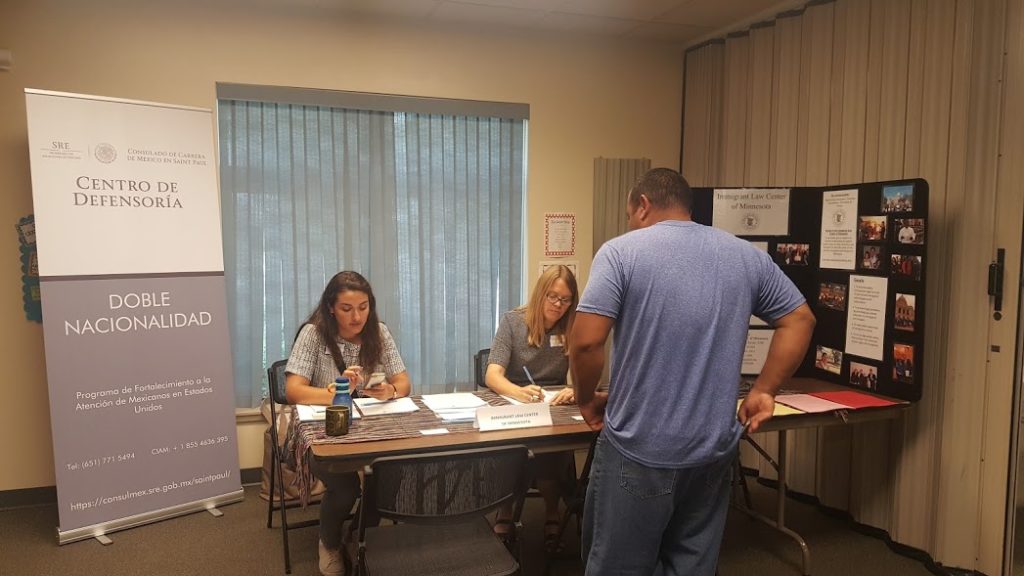
ILCM offers screening for eligibility for naturalization after each dual citizenship/doble nacionalidad workshop.

Can you be a citizen of two countries? Absolutely! That’s the message at workshops with dual sponsorship: the Immigrant Law Center of Minnesota and the Mexican Consulate in Minnesota. ILCM’s part in this project is to provide information on becoming a U.S. citizen and to offer screening and assistance to people who want to become U.S. citizens. Blanca Sánchez Rangil, a 2017 Macalester grad working as a legal assistant at ILCM, answered questions about the project:

What is the Dual Citizenship project?

ILCM is doing ten workshops at the Mexican consulate or with the mobile Mexican consulate in Minnesota, Wisconsin, North Dakota, and South Dakota – that’s the first part.

The second part is to help Mexican permanent residents to apply for U.S. citizenship.

What are these workshops?

They are basically talks about what citizenship is, the requirements for applying for U.S. citizenship, the advantages, and the process. We just talk briefly about those things. Then the people at the event come talk to us and we do a short screening for eligibility for naturalization. Then I talk to my supervisors back at the office to see if we can help these people.

So it’s a short presentation and the rest of the time talking to the people to see if they qualify.

What is the mobile consulate?

The Mexican consulate in St. Paul tours Minnesota, Wisconsin, North and South Dakota because that’s the area that they serve. They bring equipment and staff to different places for Mexican who live there to renew their passports or get what they call a matricula consular – an identity card.

How can immigrants qualify for U.S. citizenship?

You can apply for citizenship when you are a permanent resident in the United States and have been a permanent resident for 5 years (or 3 years if you are married to a U.S. citizen), and if you don’t have serious past convictions or a problematic immigration history.

What do you tell people are the advantages of citizenship?

They can no longer be deported; they can travel in and out of the U.S. as many times as they want; they can vote in U.S. elections; they can petition for visas for family members – parents, children, siblings.

Why would people not become citizens?

Some people wait if they don’t speak English and they think they can’t learn it. There are a few exceptions when you don’t need to take the test and interview in English but can do it in your native language. If you are 50 years old at least and have been a U.S. legal resident for 15 years, or if you are older than 65, you can get a simplified test.

What do people need to do to become citizens?

They need to complete the application for naturalization – it’s called N-400. There’s a $725 fee. They might be able get a fee waiver if they have a low income.

Then they will receive a notice to get biometrics – fingerprints and photo. In the process of approving the application, they do an FBI background check and also an immigration records check.

After that, they’ll have an interview with an immigration officer. The officer asks them questions about their application.

They also need to take a U.S. civics test. After that, the officer can either recommend for approval or take more time to review the application and think about it.

If the application is approved, they get an notice to attend an oath ceremony. There, they are asked a few more questions about their application and they take the oath of allegiance and they become citizens.

Why do you think this program is important?

I think that having free services for people who qualify and knowing how beneficial it is for most of them to become citizens is very important.


Ojoye Akane: Connecting families, faith and homes

Delivering counseling and education on home ownership, Ojoye Akane travels from Faribault to Rochester to Albert Lea to Austin. He logs a lot of miles in his work for Three Rivers Community Action, but his travel around southern Minnesota is easy compared to the longer life journey that brought him here. That journey contributes to the passion that inspires his work with families and their homes.

Akane grew up in Ethiopia, an orphan raised by “multiple people,” including a grandma and two uncles. “Maybe that shaped my personality,” he says. “If you feel connected with a family, even if you don’t have parents, that family would shape your life.”

Akane arrived in the United States in 2004, staying first with an uncle in Mankato. He and his wife and children moved to Austin in 2011, buying a home in 2015.

Today, his home in Austin is filled with family – his wife, their four children, a step-daughter who now attends the University of Minnesota, and nieces, nephews and other relatives who frequently visit. In August, nieces and nephews came for extended visits highlighted by visits to the county fair.

“I’m passionate about children,” Akane says. He’s also passionate about his faith and about education. He drives children to Faith Church every Wednesday for services and religious education. “I just want them to come there, especially when the kids and their parents are not connected to any religious organization or church,” he explains. “To me, faith is part of my personality.”

Akane describes his job as an emerging market initiative created to provide financial and homeownership education and counseling services and advocate for minority home buyers. The initiative also serves other special needs populations, such as single parents and people with disabilities. He does short-term and long-term counseling for first-time home buyers, as well as delivering workshops for first-time home buyers.

Financial literacy workshops focus on skills such as budgeting and establish credit, and include an introduction to home ownership. Home Stretch workshops provide an in-depth overview of the home buying process, and are often required by financial institutions as a pre-condition for getting a mortgage.

“I love the work I’m doing,” Akane says. The best part of the work comes “when you see people’s face when they are closing or when they get that new home that they dream of.”

He sees his work as giving back to the community. “I am educated, I have connections – I have to use this to give it to the people that would benefit from it.”

With undergraduate and graduate work in urban studies, Akane has his sights set on a doctorate.  When you have a potential that you are not using, he says, “that is a recipe for more education — and more debt!”

His big dreams for the future include more work with young people and with his church.

“If God has given all this energy, scholarships, funds, the generosity of this country, if God has provided me with all this, my life should be a blessing,” he says. “I want to be a blessing in this community.”

Eh Mwee: Building bridges in five languages

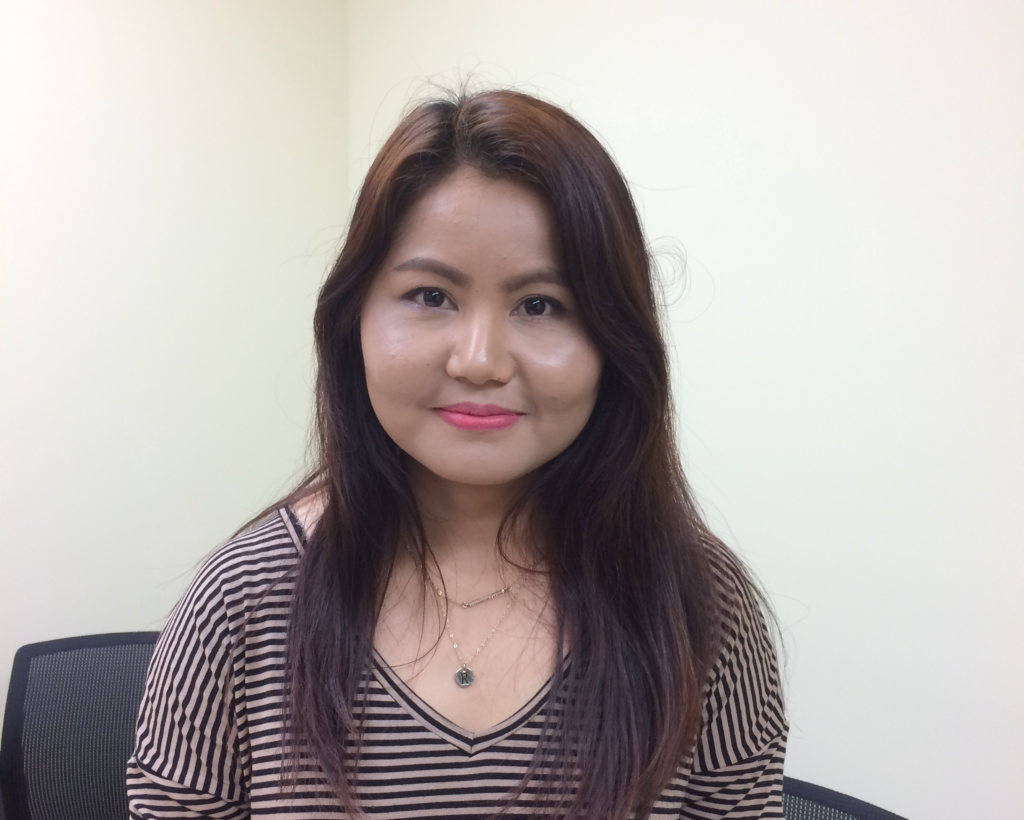
Eh Mwee is a bridge builder, though she looks too small to do that work. The bridges she builds reach from employers in Mower and Freeborn counties to Karen and Karenni refugees looking for jobs in their new home.

Eh Mwee grew up as one of those refugees, born in Burma but fleeing with her mother to a refugee camp in Thailand when she was just two months old. She was five when her mother died, and then lived with an adoptive family in the camp. Growing up without a home or country, she knew she wanted both – and more.

“When you live in a refugee camp,” Eh Mwee explains, “you don’t have a chance to go to college.” Refugees were restricted to the camp, not allowed to live or work outside the camp, and always considered illegal in the rest of the country. Their choices are to live and die inside the camp, to win resettlement in a third country, or to return to their home country. People of Karen and Karenni ethnicities still face persecution in Burma, so that was not an option.

Eh Mwee wanted more than a life behind fences. She wanted an education, a real home, even a car. She decided to seek resettlement. Waiting to turn 18, when she could apply for resettlement, she finished high school and studied English in the camp. Along with 250 others, she applied for one of 20 spots in the English Immersion Program, and got into the 10-month program.

Of the five languages she speaks, Eh Mwee says, English is the hardest.

Getting permission to come to the United States took years. Like all refugees who apply to enter the United States, she filled out applications, was interviewed by U.S. officials, waited for background checks and medical checks, and then had even more interviews. Finally, after 22 years in a refugee camp, she was approved for a U.S. visa.

Now 30, Eh Mwee has accomplished many of her dreams, including her first car, a job, and buying a home, where she lives with her husband and four-year-old daughter

At the Workforce Development Center, her job title is Karen Outreach and Job Search Instructor. She interprets, sits in on meetings with employers, finds resources, and helps her clients fill out forms and prepare resumes and applications.

Language is a barrier to success, so her interpreting is vital. She speaks Burmese and Thai, as well as two Karen languages – Po and Ska. Usually, she communicates with Karenni people in Burmese.  Once a client is hired, she may go with them to the job orientation and help them to understand expectations and safety procedures.

Immigrants’ first goal is a job, she explains, and then a home. She says most Karen and Karenni immigrants are shy and quiet, and make good neighbors.

“We love being with friends and other family members. Usually we go to church together. On birthdays, we call it thanksgiving worship, not a party. We gather everyone together and eat together. We like being friends with others and we like to help each other a lot.”