
Listen to the Children

As part of a legal action to force a change in conditions under which children are held, the Center for Human Rights and Constitutional Law filed transcripts of some of the attorneys’ interview with children. Here are some of the children’s stories:

The following are excerpts from declarations filed in connection with the request for Temporary Restraining Order in Flores v. Barr

About unsafe / unsanitary conditions

We are in a metal cage with 20 other teenagers with babies and young children. We have one mat we need to share with each other. It is very cold. We each got a mylar blanket, but it is not enough to warm up. There are benches but we cannot sleep there. Sometimes it is so crowded we cannot find a place to sleep, so they allow a few of us to sleep outside the fenced area. The lights are all of the time. (Age 16, female)

I’m hungry here at Clint all the time. I’m so hungry that I have woken up in the middle of the night with hunger. Sometimes I wake up from hunger at 4 a.m., sometimes at other hours. I’m too scared to ask the officials here for any more food, even though there is not enough food here for me. (Age 12, male)

We slept on mats on the floor and gave us aluminum blankets. They took our baby’s diapers, baby formula, and all of our belongings. Our clothes were still wet and we were very cold, so we got sick… I’ve been in the US for six days and I have never been offered a shower or been able to brush my teeth. There is no soap and our clothes are dirty. They have never been washed. (Age 16, female,)

Three days ago my baby soiled his clothes. I had no place to wash the clothes so I could not put them back on my baby because when he went to the bathroom his poop came out of his diaper and all over his clothing. Since then, my baby of only three months has only been wearing a small little jacket made of t-shirt material. I have nothing else for my son to wear…. I have been told they do not have any clothes here at this place. I just want my baby to be warm nough. I am having to make sure I carry my baby super close to me to keep his little body warm. (Age 17, female)

They told us that we could only have one layer of clothing, and they threw away the rest of our clothes in the garbage. (Age 16, male)

My baby got wet and I had to take his pants off two days ago and I have not been able to get any pants for him. (Age 18, female)

The day we arrived, my baby became sick. She could not open her eyes and had a fever which got much worse during the day. I asked the guard for help and he told me to “just deal with it.” I asked for help again, and was ignored. The third time I asked, I was crying because she was so much worse I was very worried for her. After two days, they took her to the doctor.” (Age unknown, female)

We have only bathed once since being detained. On June 4th, we were taken to an area with about 28 showers. We bathed and brushed our teeth. Since then, however, we have been able to bathe. I have not been able to wash and clean my baby since June 4th. We do not have toothbrushes or toothpaste or towels in the cages. My daughter’s onesie is very dirty. I have not been able to wash it since June 4th. (Age 17, female)

The day after we arrived here, my baby began vomiting and having diarrhea. I asked to see a doctor and they did not take us. I asked again the next day and the guard said “She doesn’t have the face of a sick baby. She doesn’t need to see a doctor.” My baby daughter has not had medicine since we first arrived. She has a very bad cough, fever and continues to vomit and have diarrhea. (Age 16, female)

At Ursula, we have not been able to shower. The toilet is out in the open in the cage, there is no door for any privacy. There is water but no soap to wash our hands. There are no paper towels to dry our hands. We have not been given a toothbrush or toothpaste to brush our teeth. (Age 17, male)

I was given a blanket and a mattress, but then, at 3:00 a.m., the guards took the blanket and mattress. My baby was left sleeping on the floor. In fact, almost every night, the guards wake us at 3:00 a.m. and take away our sleeping mattresses and blankets. They leave babies, even little babies of two or three months, sleeping on the cold floor. For me, because I am so pregnant, sleeping on the floor is very painful for my back and hips. I think the guards act this way to punish us. (Age 17, female)

Once, I needed clean clothes for my baby because she threw up but when I asked for them I was told they didn’t have any available. She is still in the same dirty clothes. (Age 17, female)

Children Taking Care of Children

I started taking care of xxx (age 5) in the Ice Box after they separated her from her father. I did not know either of them before that. She was very upset. The workers did nothing to try to comfort her. I tried to comfort her and she has been with me ever since. XXX sleeps on a mat with me on the concrete floor. We spend all day every day in that room. There are no activities, only crying. (Age 15, female)

There are little kids here who have no one to take care of them, not even a big brother or sister. Some kids are only two or three years old and they have no one to take care of them. (Age 11, male)

I am in a room with dozens of other boys. Some have been as young as 3 or 4 years old. Some cry. Right now, there is a 12 year old who cries a lot. Others try to comfort him. One of the officers makes fun of those who cry. (Age 17, male)

Family Separation

I was apprehended with my father. The immigration agents separated me from my father right away. I was very frightened and scared. I cried. I have not seen my father again… I have had a cold and cough for several days. I have not seen a doctor and I have not been given any medicine. (Age 5, male)

They took us away from our grandmother and now we are all alone. They have not given us to our mother. We have been here for a long time. I have to take care of my little sister. She is very sad because she misses our mother and grandmother very much… We sleep on a cement bench. There are two mats in the room, but the big kids sleep on the mats so we have to sleep on the cement bench. (Age 8, male)

At 3 AM the next day the officers told us that our grandmother would be taken away. My grandmother tried to show the officers a paper signed by my parents saying that my grandmother had been entrusted to take care of us. The officers rejected the paperwork saying that it had to signed by a judge. Then the officers took my dear grandmother away. We have not seen her since that moment. (Age 12, female)
 

Somali 92: Courage Amid Chaos

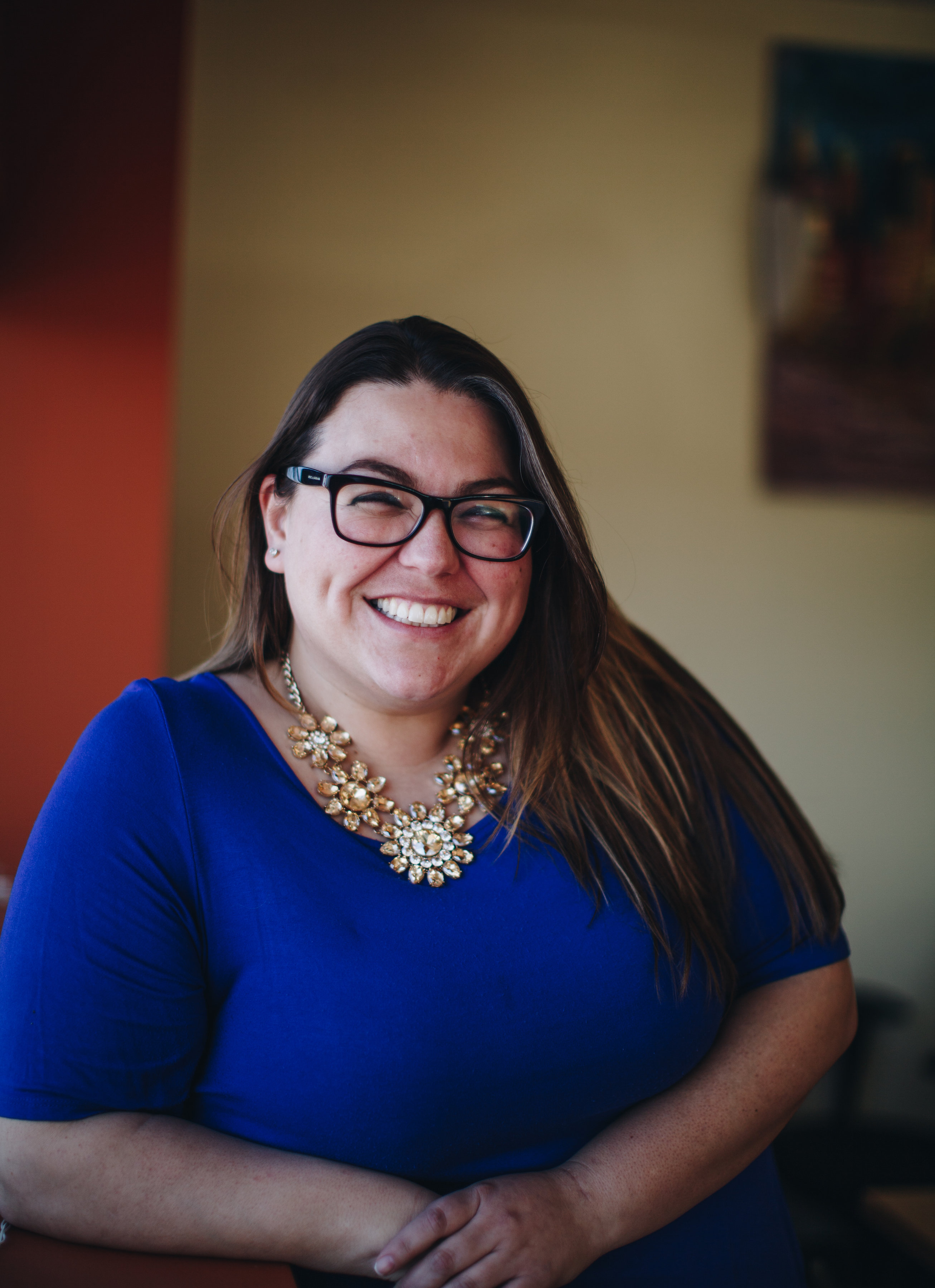
Mirella Ceja-Orozco (Photo by Mon Non for ILCM)

Mirella Ceja-Orozco was on the phone with her client about 11 p.m. on December 5, 2017. By 2 or 3 a.m., he was shackled to a seat in a plane heading for Somalia, a country he had not seen since fleeing sixteen years earlier, as a teenager.

Ceja-Orozco had represented this client—we’ll call him R—for two years. “We probably spoke five days a week, including weekends,  while he was detained,” she recalls. “That’s how invested he and I were as client and attorney.”

The deportation flight, with 92 Somali immigrants on board, landed in Senegal, not in Somalia, sat on the ground for a while, and then headed back to Florida, for reasons that are still not clear.

When the plane landed in Florida, R had a broken finger, bruising, and a possible sub-orbital fracture. He had been beaten on the airplane, he told her, though not as badly as some of the others. He saw one man on the plane so severely beaten that he passed out. During their 46 hours on the plane, detainees were denied food, water, medication, even access to bathrooms. R recalls receiving one 16 ounce bottle of water and some slices of bread when the plane took off, but nothing else during 46 hours on the plane.

The flight became international news, and the names and photos of some of the Somali 92 were published in the media. As R spoke out about ICE agents’ abuse of immigrants shackled on the plane, his photo was published in a newspaper in Somalia.

When R called Ceja-Orozco and told her what happened to him and what he witnessed on the plane, she called Ben Caspar at the University of Minnesota Law School, where she taught as an adjunct professor. Her call and others sparked a class action lawsuit that would eventually involve multiple attorneys and legal organizations in multiple states, in a case that became known as the Somali 92. The class action asked that individuals on the flight be allowed to reopen their cases, based on changed circumstances: the publicity surrounding the flight had focused attention on them and their lives would be in danger if they were sent back to Somalia.

R and the rest of the Somali 92 were forced onto that deportation flight as a direct result of Trump administration deportation policies. When Trump became president, he made deportation a policy priority. He ordered that any immigrant eligible for deportation must be deported. The administration began pressuring the governments of Somalia and other countries that did not accept deportees. Immigrations and Customs Enforcement (ICE) began jailing immigrants when they showed up for regular check-ins, and holding them in jail indefinitely. While some of the Somali 92 on that flight had criminal records, many were targeted simply because of prior. orders of removal because of lost asylum claims, changes in status, or similar circumstances.

R had an order of removal for about ten years. He was allowed to continue working and supporting his family as long as he checked in with the U.S. immigration office every six months.  He was taken into custody when he went to a regular six-month check-in.

For years before 2017, the United States did not deport anyone to Somalia because the country had no government and no way to accept deportees back into the chaos and violence of civil war. Because he could not be deported when he was detained at his check-in, R was held in  Irwin County Jail in Ocilla, Georgia and then transferred to LaSalle Detention Center in Louisiana. After the flight returned from Senegal, he was held briefly in the Krome Detention Center in Florida.

Then he was transferred from Krome Detention Center to Glades Detention Center in Florida, and immigration officials told Ceja-Orozco that his case would be transferred to a Florida immigration court. Instead, in the middle of the night, he was transferred back to Irwin Detention Center in Georgia. When Ceja-Orozco called Glades Detention Center the next day, she was told that no one knew where he was. Maybe, they said, he had been deported. “There were a few hours of panic,” she recalls, “and then he was in Georgia.”

Ceja-Orozco flew to Georgia to visit R. The Irwin Detention Center is located in Ocilla, more than a three-hour drive from Atlanta and the home town of Jefferson Davis. At the federal courthouse in Atlanta, an ICE agent warned her:  “Make sure you leave before dark, because you’re Latina. You don’t look it, but just make sure you leave before dark. Try to avoid pulling over until you get closer to the city.”

Ceja-Orozco drove through forests and past what once were plantations. ” I couldn’t help but visualize scenes of people running and hiding and trying to escape slavery,” she said. “It was such an eerie feeling and vibe—coupled with my imagination and what the ICE agent had told me at the courthouse. I thought: my client is black, he’s Muslim, and he’s here.”

She visited R three times, and experienced no hostility or rudeness. But, she says, “I always left before dark.”

In June 2018, 14 months after he was first detained, a court granted bond to R, allowing him to leave immigration detention while his case makes its way through the system. He and his family now live in Minnesota, and Ceja-Orozco continues to represent him.

“I remember the day that he got bond,” she says. “I cried. I’ve never cried in open court, and I cried—tears were coming down my face. There was such a relief. I felt that I didn’t care if I never practice again—I got him bond.”

When Ceja-Orozco began representing R, she was an attorney in private practice. By the time that the Somali 92 class action was filed, she was working pro bono, as the cost of representation mounted beyond anything her client could pay. When she came to work at the Immigrant Law Center of Minnesota, R became a client of ILCM and she continued to represent him.

“I never would have been able to do it all by myself,” Ceja-Orozco says. “Thankfully, ILCM allowed me to keep it as a pro bono case—there’s no way my client and his wife could have continued the fight if they had to pay for it. I was lucky and my client was lucky that we had support from the University of Minnesota Law School, and the entire litigation team that gathered to support and represent the Somali 92.

“That for me also epitomizes how awesome the immigration bar is, because they jumped in, not fully knowing how deep it would go or how crazy it would get, but saying. ‘How can I help you?’ and actually meaning it, not just saying it as a formality.”

After months of litigation, the class action was finally resolved in 2019. Immigrants who had been on that flight were either allowed relief by reopening their cases or opted out or were denied relief.

“It’s one of the cases that has defined my career,” Ceja-Orozco says. “The convolutedness, the overwhelmngness of it all epitomized what the Trump administration has done to the profession. I started practicing immigration law under the Obama administration, with DACA and welcoming people and having them become part of the salad bowl. Now it’s ‘No. You are different.’ instead of welcome. This case defines that change for me as a practitioner. I never had gray hair until this case.”


Ceja-Orozco and the rest of the Somali 92 team have been honored with the  The Advocates for Human Rights award, which will be presented at the Advocates’ annual awards dinner on June 20, and with  the 2019 Arthur C. Helton Memorial Human Rights Award at the American Immigration Lawyers Association (AILA) Annual Conference in Orlando, Florida on the same day.


New Deportation Threat: ‘Reprehensible and Dishonest’

June 18, 2019 – Last night’s Twitter threat to deport “millions” of long-time U.S. residents goes hand-in-hand with the official kick-off of Trump’s re-election campaign. This White House bluster aims to stir up the president’s supporters, while sowing terror and confusion in the immigrant community.

Nearly two-thirds of unauthorized immigrant adults have been in the United States for more than 10 years. They work and contribute to the United States economy. They have homes and families here. Many are married to U.S. citizens and legal residents and have U.S. citizen children. Our antiquated and punitive immigration laws give them no way to legalize their status. Reforming those laws, not separating and deporting families, is where our government should focus.

“Last night’s presidential Tweet represents a reprehensible and continuing policy of terrorizing and intimidating immigrant communities while appealing to the worst xenophobia and racism of an unrepresentative but vocal minority in the United States,” said Lenore Millibergity, interim executive director of the Immigrant Law Center of Minnesota (ILCM). “This threat is not only disgusting, but also dishonest: deporting ‘millions’ of unauthorized immigrants is a legal and logistical impossibility.”

The highest numbers of immigrants deported in a single year came in 2012-2014, when more than 400,000 immigrants were deported each year. Currently, immigration detention centers are full and immigration courts have years-long backlogs. There is no way that the president’s threat can be carried out. The government does not have the capacity to do so.

“We have no doubt that the administration will try to implement some high-profile arrests and speedy deportations in the next weeks,” said Millibergity. “Immigrants, including millions of families with mixed immigration status, need to be aware of their due process rights. Legal services offices like ours will respond in any way that we can, although our capacity is already stretched to the maximum. We call on elected officials at local, state, and national levels to denounce this continuing attack on the immigrant community.”