Expanded Expedited Removal: What You Should Know

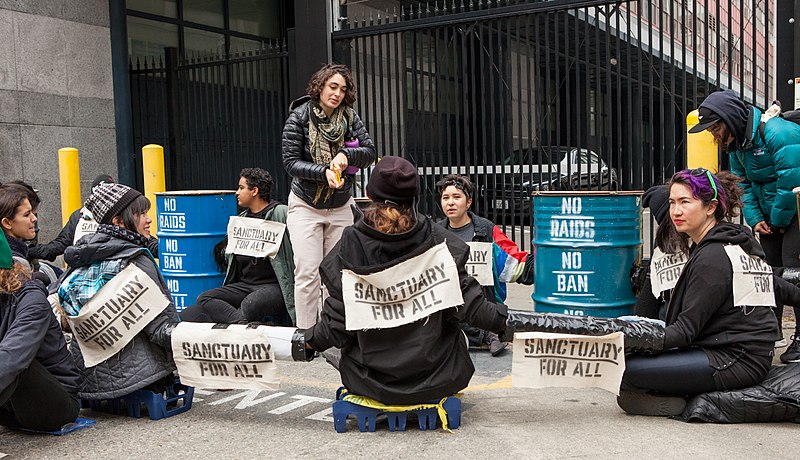
Photo by Pax Ahimsa Gethen (CC by 4.0)

U.S. Immigration and Customs Enforcement (ICE) has announced it is implementing the Trump administration’s plan to expand expedited removal – a process where ICE can deport someone without allowing them to speak to a judge. Expanded expedited removal does not apply to most of the immigrants in the United States. Check out the resources below to find out about your rights in an encounter with ICE. If you are an ILCM client, call your case handler if you have any questions about expedited removal. If you are not an ILCM client, you can call our intake line to set up a consultation.

Call our office at 651-641-1011 or  1-800-223-1368 during the following intake hours to schedule an appointment to speak to a legal staff member:

Monday: 10 a.m. – 1 p.m.

Tuesday: 1 p.m. – 4 p.m.

Wednesday: 10 a.m. – 1 p.m.

Thursday: 3 p.m. – 6 p.m.

For people possibly impacted:

Know Your Rights: ICE Enforcement Actions And Expanded Expedited Removal – This information can help you protect yourself and your family, and defend your rights.

  1. Create A Safety Plan
  2. Defend Your Rights
  3. Be Prepared For Different Scenarios

PDF version of this “Know Your Rights” information here.

Conozca Sus Derechos: Paradas De ICE Intensificadas – Esta información le puede ayudar a protegerse a sí mismo y a su familia, y a defender sus derechos.

  1. Prepare Un Plan De Acción
  2. Defienda Sus Derechos
  3. Preparese Pare Escenarios Diferentes

Haga clic aquí para la versión PDF de esta información

English – Tahirih Justice Center

Español/Spanish – Tahirih Justice Center

Français/French – Tahirih Justice Center

For immigration practitioners and know-your-rights presenters:

Toolkit to Assist People Facing Expanded Expedited Removal (Immigrant Legal Resource Center (ilrc)) – These materials will help practitioners and presenters assist and counsel people who might be subject to this changed enforcement policy. Please read all information and instructions carefully. Expedited removal advice will
be highly case-specific, so it is important to follow the case-specific advice.
Oppose Biometrics Database! Submit a Comment!

The Department of Homeland Security has proposed a new rule that requires visa applicants and many U.S. citizens to provide extensive biometric information, including iris scans, voiceprints, palm prints, fingerprints, and facial recognition data. The law already authorizes collection of fingerprints and photographs from visa applicants. The proposed new rule would vastly expand the types of information collected and the people required to furnish it, affecting more than 6 million people every year. You can file a comment opposing this rule.

Imagine this scenario: You studied abroad, you met the love of your life, and you want them to come spend the rest of their life in the United States with you. Now: get ready to bare your body and soul to the federal government. Immigration authorities want your iris scan, voice print, palm print, facial recognition data, and, of course, your fingerprints. They will store all of this information from you and your future spouse in a permanent database. They may share your personal information with U.S. law enforcement organizations. They might also share this information with law enforcement organizations in your future spouse’s home country.

The government is required to allow the public to read and comment on proposed rules. Comments are public records that anyone can read. The agency proposing a new rule must read all the comments and consider. The agency may make changes to the rule after considering comments. If a large number of comments are submitted, it will take longer to publish the final rule. You can read ILCM’s comment here.

The comment period for this rule ends on Tuesday, October 13. You can make a comment by clicking here and entering your comment.

Here are some details about the proposed rule:

  • DHS proposes maintaining an extensive database of biometric data—including fingerprint, palm print, facial recognition, photographic, voice print, iris image, and DNA evidence—on any citizen or non-citizen who applies for an immigration benefit or is associated with an application for such a benefit.
  • DHS estimates that it would collect this information on more than 6 million people every year. This would cost of billions of dollars. The increased work would slow down the already backlogged legal immigration system.
  • A pilot facial scan system at the border was hacked last year. Thousands of facial recognition files were accessed. Some images were posted on the dark web. The proposed regulation would increase the danger of personal data being stolen.

The comment period for this rule ends on Tuesday, October 13. You can make a comment by clicking here and entering your comment.


Hoja informativa: Aumentos de tarifas de inmigración y cambio de exención de tarifas (Actual a partir del 6 de octubre de 2020)

(Actual a partir del 6 de octubre de 2020) Esta información no es un consejo legal. Consulte a un abogado calificado de inmigración para obtener asesoramiento sobre su situación.

Haga click aquí para encontrar el archivo PDF.

This Fact Sheet in English.

IMPORTANTE: El 29 de septiembre de 2020, un tribunal federal ordenó al USCIS no cambiar sus tarifas mientras se decide un caso que impugna los aumentos de tarifas. Las tarifas seguirán siendo las mismas mientras la orden judicial esté en vigor.

¿Cuáles son las tarifas actuales y cuáles son las nuevas tarifas?

USCIS planea aumentar las tarifas para muchas aplicaciones, a menos que los tribunales continúen deteniéndolas. Las aplicaciones más comunes para las que las tarifas están aumentando son:


Tarifa actual (por orden judicial) Nueva tarifa (desconocido cuando podria tener efecto) Incremento porcentual
Ciudadanía (N-400) $320/$640 $1,160 (en línea)/ $1,170 (papel) 266%/81%/83%
Residencia permanente legal (I-485) $1,225 $2,195 ($1130 para solicitud y tarifas adicionales para documentos de trabajo y viaje)
Asilo (I-589) Sin cargo $50 N/A
Autorización de empleo (I-765) $410 $550 34%
Solicitud para alguien que obtuvo la residencia permanente legal a través de una visa U (víctima de un crimen) para patrocinar a un familiar (I-929) $230 $1,485 546%
Renuncia de presencia ilegal necesaria para muchos solicitantes de residencia permanente legal (I-601A) $630 $960 52%


La tarifa para los solicitantes de asilo sería la primera en la historia de nuestra nación. Solo otros tres países en el mundo cobran una tarifa para solicitar asilo.

Se estableció que las tarifas aumentarían el 2 de octubre de 2020, pero un tribunal ha detenido temporalmente estos cambios. La lista anterior es una lista parcial de algunas de las aplicaciones más comunes. También hay muchos otros cambios propuestos.

¿Qué tipo de exenciones de tarifas están disponibles ahora y cuáles son los cambios propuestos?

Las exenciones de tarifas permiten a los inmigrantes de bajos ingresos presentar solicitudes sin pagar tarifas. En este momento, las exenciones de tarifas están disponibles para algunas solicitudes de inmigración, que incluyen:

  • Ciudadanía
  • Residencia permanente legal (solicitud inicial de tarjeta verde) para algunos grupos de inmigrantes
  • Auto-peticiones (protección para algunas víctimas de violencia doméstica)
  • Visas U (visas para algunas víctimas de delitos violentos)
  • Visas T (visas para víctimas de trata)
  • Autorización de empleo (excepto para beneficiarios de DACA)

USCIS se estableció para eliminar las exenciones de tarifas para la mayoría de las solicitudes el 2 de octubre de 2020, pero un tribunal detuvo temporalmente este cambio. Si el cambio entra en vigencia, las exenciones de tarifas solo estarán disponibles para los inmigrantes que presenten auto-peticiones o solicitudes relacionadas con VAWA, visas U, visas T, estatus de protección temporal (protección para inmigrantes de ciertos países que Estado de inmigrante juvenil que se encuentra en cuidado de crianza.

¿Qué puedes hacer?

Consulte a un abogado de inmigración calificado si desea presentar una solicitud de ciudadanía, residencia permanente legal u otras protecciones de inmigración antes de que cambie el proceso de exención de tarifas y / o aumenten las tarifas. Es muy importante que hable con un abogado de inmigración calificado antes de enviar cualquier solicitud a USCIS. Un abogado calificado lo entrevistará sobre su historial de inmigración. Revisarán todos los documentos relevantes. Ellos le informarán si es elegible para enviar la solicitud. También le dirán si corre algún riesgo de que la solicitud sea denegada y / o de ser puesto en proceso de deportación.


Puede comunicarse con el Immigrant Law Center of Minnesota al 651-641-1011 los lunes, martes y miércoles de 9 a.m. a 4 p.m. y jueves de 1:30 pm a 7 p.m.

Fact Sheet: Immigration Fee Increases and Fee Waiver Change (Current as of October 6, 2020)

(Current as of October 6, 2020) This information is not legal advice. Consult a qualified immigration attorney for advice about your situation.

Haga click aquí para la hoja en Español.

Printable PDF version of this fact sheet here.

Photo version of this fact sheet here.

IMPORTANT: On September 29, 2020, a federal court ordered USCIS not to change their fees while a case challenging fee increases is being decided. Fees will remain the same while that court order is in effect.

What are the current fees and what are the new fees?

USCIS plans to increase fees for many applications, unless courts continue to stop them. The most common applications for which the fees are increasing are:

Current Fee (per  court order) New Fee (unknown when may take effect) Percentage Increase
Citizenship (N-400) $320/$640 $1,160 (online)/ $1,170 (paper) 266%/81%/83%
Lawful permanent residence (I-485) $1,225 $2,195 ($1130 for application + additional fees for work and travel documents)
Asylum (I-589) No fee $50 N/A
Employment authorization (I-765) $410 $550 34%
Application for someone who obtained lawful permanent residence through a U visa (victim of crime) to sponsor a family member (I-929) $230 $1,485 546%
Waiver of unlawful presence needed for many applicants for lawful permanent residence (I-601A) $630 $960 52%


The fee for asylum applicants would be the first in our nation’s history. Only three other countries in the world charge a fee to apply for asylum.

The fees were set to increase on October 2, 2020 but a court has temporarily stopped these changes. The list above is a partial list of some of the most common applications. There are many other proposed changes as well.

What kind of fee waivers are available now and what are the proposed changes?

Fee waivers allow low-income immigrants to submit applications without paying fees. Right now, fee waivers are available for some immigration applications, including:

  • Citizenship
  • Lawful permanent residence (initial application for a green card) for some groups of immigrants
  • Self-petitions (protection for some victims of domestic violence)
  • U visas (visas for some victims of violent crimes)
  • T visas (visas for victims of trafficking)
  • Employment authorization (except for DACA recipients)

USCIS was set to eliminate fee waivers for most applications on October 2, 2020, but a court has temporarily stopped this change. If the change goes into effect, fee waivers will only be available for immigrants who are submitting self-petitions or applications related to VAWA, U visas, T visas, Temporary Protected Status (protection for immigrants from certain countries that are in crisis) or Special Immigrant Juvenile Status who are in foster care.

What Can You Do?

Consult a qualified immigration attorney if you wish to file an application for citizenship, lawful permanent residence, or other immigration protections before the fee waiver process changes and/or fees increase. It is very important that you speak to a qualified immigration attorney before you submit any application to USCIS.  A qualified attorney will interview you about your immigration history. They will review all relevant documents. They will advise you if you are eligible to submit the application. They will also tell you whether you face any risks of the application being denied and/or being put into deportation proceedings.

You can contact the Immigrant Law Center of Minnesota at 651-641-1011 on Mondays, Tuesdays, and Wednesdays from 9 a.m. to 4 p.m. and Thursdays from 1:30 pm to 7 p.m.

Refugee Cap Set at Lowest Level Since Beginning of Program Despite Continuing Threats of Persecution

October 1, 2020— Once again, the Trump administration is saying no to desperate refugees who have already completed the application process, already been vetted, and now wait in dismal camps around the world. By law, the president sets the cap on refugee admissions each year. For Fiscal Year 2020, he set that cap at 18,000, the lowest number since the beginning of the refugee admissions program. For Fiscal Year 2021, which began today, he slashed it even further to 15,000.

Even worse, actual refugee admissions to the United States in Fiscal Year 2020 were less than 11,000. Of the 4,000 slots allotted to Iraqis whose lives are in danger because of their work for the United States, only 123 were admitted.

“The Trump administration’s hostility toward refugees betrays U.S. ideals and commitments,” said Veena Iyer, executive director of the Immigrant Law Center of Minnesota (ILCM). “Slashing refugee numbers and refusing admission to desperate people whose lives are in danger, especially those whose lives are in danger because of their service to U.S. soldiers and peacekeepers, is appalling. Instead of leading the world in protecting the persecuted, the actions of this administration are an abdication of leadership.”

People applying for refugee status have already been vetted by the U.N. High Commission on Refugees. Those who are granted U.N. refugee status typically languish for years in refugee camps. Only a small percentage are eventually allowed to apply for admission to the United States. Those allowed to apply then go through a stringent U.S. application and vetting process.

In 2016, the United States admitted 84,994 refugees. Minnesota welcomed 2,635 of them. In 2020, the United States admitted 10,892 refugees through September 25, 2020. Minnesota welcomed 289 of those refugees. The largest numbers came from Burma (187) and from Ukraine (67).


Fall Staff Changes

This fall ILCM welcomes four new individuals to our team and celebrates three current staff members in their new positions at ILCM. We also welcome two new volunteers to our pro bono team and welcome back four volunteers to our Community Defense team, two to our communications team, and one to our Austin office.

LVC volunteer Johan Cavert headshot
Johan Cavert

Johan Cavert joined ILCM as a Lutheran Volunteer Corps (LVC) volunteer for this upcoming year in August, 2020. Johan spent this past summer as an intern with our community defense project, and over the next year, he will continue working with our community defense team and will also work with our pro bono team and provide some back up on intake. He is a 2020 graduate of Oberlin College, where he studied public policy, economics, and Spanish.


Andrea Duarte-Alonso

Andrea Duarte-Alonso is a Lead for America fellow with the Southwest Initiative Foundation (SWI). Because of Andrea’s interest in working on immigration issues, SWI has allowed Andrea to work at ILCM part-time and fully funded for the second year of her fellowship. Andrea lives in Worthington and will be working outreach and case support in Southwest Minnesota. Andrea earned bachelor’s degree in 2019 from from St. Catherine University in political science, women’s studies, and English, and she is a Truman scholar.

Hannah Gross

Hannah Gross also joined ILCM as an LVC volunteer in August, 2020. Hannah will be working with our development team and providing much needed administrative, research, and other support for our development work. Hannah is a 2020 graduate of Luther College, where she majored in Social Work and Nordic Studies.

Mackenzie Heinrichs

Mackenzie Heinrichs is an Equal Justice Works fellow who will be working with ILCM for the next two years to respond to the needs of DACA recipients and DREAMers in the wake of the Supreme Court decision on the program and any subsequent action by USCIS and Congress. Mackenzie is a 2018 graduate of the University of Minnesota Law School and has spent the last two years working as an Attorney Advisor for the Executive Office of Immigration Review in Southern California.

Kathy Klos continues her work with ILCM as the Supervisor for our Pro Bono Project and Intake process. She began working with ILCM in May 2009 as a project attorney and then moved to Worthington, Minnesota in December 2009 to open and staff the ILCM satellite office there. Since August 2013, Kathy has worked in the St. Paul office, providing legal representation, outreach, and supervision of the Worthington office. 

Sara Karki continues her work with ILCM in Greater Minnesota as the Supervisor of our Greater Minnesota offices in Austin, Moorhead, and Worthington. Sara Karki joined ILCM five years ago as a staff attorney in our Austin office. She will also continue to lead the Austin Area Minority Business Project (AAMBP). In 2019, Sara was named a 2019 Attorney of the Year by Minnesota Lawyer.

Tim Sanders Szabo continues his work with ILCM as our new Pro Bono Manager. He joined ILCM fall of 2018 as the recipient of an Equal Justice Works Fellowship sponsored by 3M and Faegre Baker Daniels. Tim’s project focused on establishing medical-legal partnerships with clinics in North and South Dakota, through which he worked alongside ILCM attorneys, staff, and pro bono counsel to increase access to legal assistance for underserved non-citizens in those areas. 

This summer, we said goodbye to Simeon Huff, last year’s LVC volunteer, and Sonja Dangler, one of our pro bono project interns who came on part-time to support us when Anne Applebaum left her role as Pro Bono Director. We wish Simeon the best of luck as he works in social service back home in North Carolina/Tennessee and to Sonja as she starts social work graduate school at the University of Texas at Austin.

2020 Young Leader Award: Oballa Oballa

Congratulations to Oballa Oballa on receiving this year’s Young Leader Award from the Resettlement Programs Office of the Minnesota Department of Human Services! The Resettlement Programs Office “recognize[s] that there are many Minnesotans with a refugee experience who are making a positive contribution in Minnesota. Every year [they] honor local leaders and citizens with Outstanding Refugee Awards to recognize former refugees who are making Minnesota a better place for all of us.”

Oballa and his family arrived in the United States in December 2013. Initially, they lived together in Maryland before Oballa moved to Sioux Falls, South Dakota for Job Corps training. His mother moved to Austin, Minnesota, and Oballa joined her there after completing his Certified Nursing Assistant (CNA) certificate. Oballa worked with ILCM staff attorney Sara Karki and in December 2019 became a United States citizen. Oballa has long been a public voice and leader, even before becoming a citizen.

“Oballa was appointed by Mayor Tom Stiehm to Austin’s Human Rights Commission, and elected by his fellow students as president of the student senate at Riverland College. [He] is passionate about eliminating food insecurity, and he founded his school’s first ever food pantry. Oballa is also president of LeadMN, which represents 180,000 community and technical college students across the state of Minnesota. He’s garnered statewide, bipartisan support for ending food insecurity on college campuses, resulting in the Minnesota Legislature passing the Hunger Free Campus Act in May 2019.” (Minnesota Department of Human Services)

(To read more about Oballa’s immigration story, click here.)