
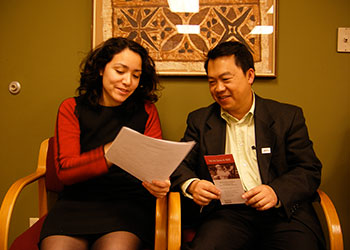



Minneapolis artist Ricardo Levins Morales filmed a Metro Transit officer interrogating someone on a Blue Line train – asking him “Are you here legally?” Immigration enforcement is not an assignment for Metro Transit officers, and Levins Morales challenged him. After the video was posted to Facebook, Metro Transit police chief John Harrington said he “called for an Internal Affairs investigation to gather the details about this incident and to report back to me as quickly as possible.”
Archives
Getting to know new Minnesotans – Part Three: Who can get in line?
You’ve heard it many times, maybe even said it – why don’t they just get in line? Minnesota has an estimated 90,000 – 100,000 undocumented immigrants, many of them living here for five, ten, twenty years, raising families, working, paying taxes – why don’t they just get in line? The answer is pretty simple: for most people, there is no line.
Immigrants make up 13.5 percent of the national population but only 8.3 percent of Minnesota’s population in 2015. The “Getting to know new Minnesotans” series explores some of Minnesota’s immigration picture. Click to read Part One: How many immigrants? and Part Two: Where do they come from?
Immigration to the United States is severely restricted. If you want a permanent resident visa, you need to have special qualifications. Since 1920, a quota system has restricted the numbers of immigrants by category and by country. That quota system has changed in various ways – mostly becoming more complicated – over the years, but most immigration today is still based on quotas and special statuses.
One exception to quotas: Spouses and unmarried minor children of U.S. citizens, and parents of adult U.S. citizens can generally immigrate “quickly.” With processing delays, “quickly” usually means a year or more.
Not all spouses, parents and children of U.S. citizens can get these visas. If a spouse or parent or child has previously entered the United States without authorization, they still might be barred from getting a visa, sometimes for three years, sometimes for 10 years, sometimes longer.
Except for these immediate relatives of U.S. citizens, an immigrant needs special qualifications to be allowed even to apply for a visa – to “get in line” for the limited number of visas available each year.
- Family preference –An adult child or a brother or sister of a U.S. citizen or as a spouse, a minor child, or an unmarried adult child of a legal permanent resident can apply. If you qualify for a family preference visa, you can get in line. The lines stretch out for years and sometimes for decades.
- Refugee or asylum – People can apply if they can prove they are in danger of persecution because of race, religion, political opinion, nationality, or membership in a social group. The vetting process for a refugee application takes years. And, again, the United States strictly limits the number of people who can enter as refugees.
- Employment – A highly skilled or exceptional individual (think Einstein or a major league baseball star) who is sponsored by an employer can apply for one of a very limited number of visas;
- Investment – Somebody with half a million dollars or more to invest in the United States can apply for a permanent resident visa. Someone like the investors meeting with Jared Kushner’s sister in Beijing, for example.
- The lottery – USCIS describes it: “The Diversity Immigrant Visa Program (DV Program) makes up to 50,000 immigrant visas available annually, drawn from random selection among all entries to individuals who are from countries with low rates of immigration to the United States.” That last phrase is important: countries with low rates of immigration to the United States means no one from these countries is eligible to even enter the lottery: Bangladesh, Brazil, Canada, China (mainland-born), Colombia, Dominican Republic, El Salvador, Haiti, India, Jamaica, Mexico, Nigeria, Pakistan, Peru, Philippines, South Korea, United Kingdom (except Northern Ireland) and its dependent territories, and Vietnam.
Twenty-four years ago, Juana left an abusive relationship, taking her twelve-year-old son and her ten- and eight-year-old daughters with her. Together they walked for six hours across the desert, leaving Mexico for the promise of a safer life in the United States.
The family was captured by the border patrol. Juana and her children ended up back in Tijuana—and in jail. Her son was jailed with the men, separated from his mother and sisters for long, fearful hours, until they were all released. Once again, they headed back to the border, this time making it across.
They came to Minnesota, a place Juana called “more beautiful than the movies.” Juana and her children lived here for 14 years. She worked hard and paid taxes, raised her children, and saw their children born as U.S. citizens. Then, ten years ago, Juana was arrested and deported again.
Juana never had a chance to stand in line. There was no line for her – not in 1993, not in 2007, not today.Our immigration system is broken. Comprehensive immigration reform is needed, but comprehensive immigration reform has been blocked for years.
Republican immigration bill threatens to turn millions of people into criminals overnight
The Intercept summarizes the “little noticed bills, marked up in the House Judiciary Committee Thursday” that would “bring sweeping changes to the nation’s immigration enforcement apparatus, adding thousands of new deportation officers and, among other things, equipping each of them with body armor and an assault rifle.”
REAL ID Update / Noticias de REAL ID
[Español abajo.]
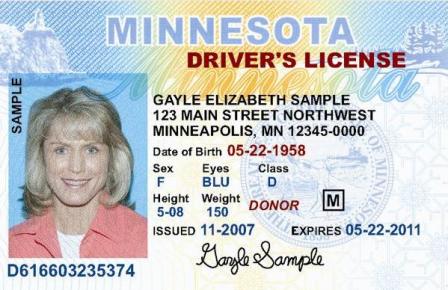
On May 17, the Minnesota legislature approved a compromise in the REAL ID bill that does not include anti-immigrant language. They did NOT approve drivers licenses for undocumented immigrants and those licenses will not be issued.
REAL ID makes Minnesota law work with federal law, so that Minnesota drivers’ licenses can be used as identification in airports and other places. Under the new Minnesota law, Minnesota will have two classes of drivers’ licenses: compliant and non-compliant. Only a REAL ID-compliant license will be accepted for boarding a plane after next year.
People getting a drivers’ license can choose either kind. Only citizens and legal immigrants can get REAL ID-compliant licenses.
The legislature had three choices about licenses for unauthorized immigrants:
1) It could have used this law to allow issuing non-compliant licenses to unauthorized immigrants. This did not happen.
2) It could have used this law to forbid issuing any license to unauthorized immigrants. This did not happen.
3) It could have just left all language about immigrants out of the bill, leaving the current law in place. This was called a “clean” REAL ID bill. This is the bill that passed.
The REAL ID Conference Committee of 3 House members and 3 Senate members unanimously adopted compromise language on REAL ID that does not include anti-immigrant language. The House of Representatives voted 120-11 to approve this “clean” version. The Senate voted 57-8 to approve it. Governor Mark Dayton signed it into law.
Important note – There will still likely be efforts by House Republicans to put the anti-immigrant & anti-rulemaking for driver’s licenses language in a different bill, such as the Omnibus Judiciary/Public Safety budget bill. The governor vetoed the first Omnibus Judiciary/Public Safety bill on Monday 5/15. He said:
“This budget also has a controversial provision that was added into the conference report at the last minute relating to DPS’s authority to engage in rulemaking regarding lawful status for a driver’s license. As I have stated repeatedly, this language is not necessary because current law prohibits DPS from rulemaking without the Legislature’s prior approval.”
We will be watching to see what language goes into the next version of the omnibus bill. Everything happens very quickly at the end of the session. Sometimes new language is put in bills without public notice.
Please stay tuned! We will need your help to try to keep that anti-immigrant language out of any bill this year.
Noticias de REAL ID – 17 de mayo de 2017
El día 17 de mayo, la legislatura de Minnesota aprobó un compromiso en el proyecto de ley REAL ID que no incluye lenguaje antiinmigrante. No aprobaron licencias de conducir para inmigrantes indocumentados y esas licencias no serán emitidas.
REAL ID hace que la ley de Minnesota trabaje con la ley federal, por lo que las licencias de conducir de Minnesota pueden ser utilizadas como identificación en aeropuertos y otros lugares. Bajo la nueva ley de Minnesota, Minnesota tendrá dos clases de licencias de conducir: una clase de licencias que se ajusta a la ley federal y otra clase que no es conforme. Sólo se aceptará una licencia REAL ID en conformidad con el acuerdo de embarque en un avión después del próximo año.
La gente que consigue una licencia de conducir puede elegir cualquiera de las dos clases. Sólo los ciudadanos y los inmigrantes legales pueden obtener licencias REAL ID-compliant – las licencias que se ajusta a la ley federal.
La legislatura tenía tres opciones sobre licencias para inmigrantes no autorizados:
1) Podría haber utilizado esta ley para permitir la emisión de licencias no conformes a inmigrantes no autorizados. Esto no ocurrió.
2) Podría haber utilizado esta ley para prohibir la expedición de cualquier licencia a inmigrantes no autorizados. Esto no ocurrió.
3) Podría haber dejado todo el lenguaje de los inmigrantes fuera del proyecto de ley, dejando la ley actual en su lugar. Esto fue llamado un “limpio” REAL ID. Este es el proyecto de ley aprobado.
El Comité de la Conferencia REAL ID de 3 miembros de la Cámara y 3 miembros del Senado aprobaron por unanimidad un lenguaje de compromiso en REAL ID que no incluye lenguaje anti-inmigrante. La Cámara de Representantes votó 120-11 para aprobar esta versión “limpia”. El Senado votó 57-8 para aprobarlo.El gobernador Mark Dayton lo firmó como ley.
Nota importante – Todavía habrá esfuerzos por parte de los Republicanos de la Cámara para poner el lenguaje anti-inmigrante y prohibiendo reglas para las licencias de conducir en una proyecto de ley diferente, tal como la legislación Omnibus del Poder Judicial / Seguridad Pública. El gobernador vetó el proposito de Ley Omnibus Judicial / Seguridad Pública el lunes 5/15. El dijó:
“Este presupuesto también tiene una disposición polémica que se agregó en el informe de la conferencia en el último minuto en relación con la autoridad del DPS para participar en la reglamentación sobre el estatus legal para una licencia de conducir. Como he dicho repetidamente, este lenguaje no es necesario porque la ley actual prohíbe DPS de la reglamentación sin la aprobación previa de la Legislatura.”
Estaremos vigilando para ver qué lenguaje entra en la próxima versión de la legislación de omnibus. Todo sucede muy rápidamente al final de la sesión. A veces el nuevo lenguaje se pone en proyectos de ley sin aviso público.
¡Por favor manténgase al tanto! Necesitaremos su ayuda para tratar de mantener ese lenguaje anti-inmigrante fuera de cualquier proyecto de ley este año.
Haitians need Temporary Protected Status extension
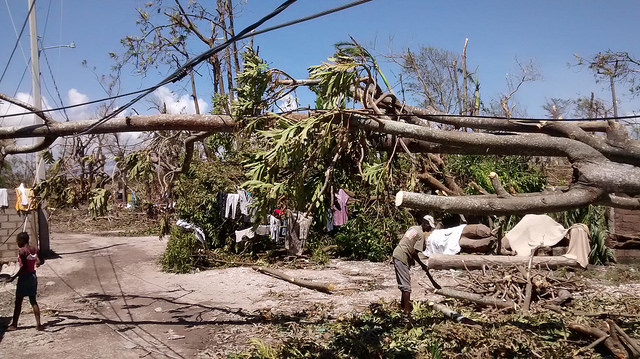
Nearly 50,000 Haitians living in the United States face the prospect of being forced out on July 22. That is when their Temporary Protected Status (TPS) will expire, unless extended by the Trump administration. Haitian TPS began after the 2010 earthquake, and has been extended since then because of the impossible conditions still prevailing in Haiti.
A devastating earthquake hit Haiti in January 2010, killing more than 200,000 people, injuring more than 300,000, and displacing more than two million out of a population of about 10 million. That is about one out of every give people killed, injured or homeless, in the poorest country in the hemisphere.
Aid and rescue workers from around the world swooped in to help. They brought cholera with them. Ten months later Haiti was in the middle of its first cholera outbreak in a century. By 2016, cholera had sickened more than 800,000 Haitians and killed more than 10,000.
And then, in October 2016, Hurricane Matthew swept across southern Haiti.
The country has not recovered – not from the earthquake, not from cholera’s continuing impact, not from the hurricane. In January, the Miami Herald reported on people living in caves, and others starving to death:
“Haiti’s current humanitarian situation is precarious and likely to get worse, the United Nations’ Office for the Coordination of Humanitarian Affairs warned.
“’The vast majority of agricultural households have not recovered their means of production, their financial situation is rapidly deteriorating and their access to basic services has diminished considerably because of the end of emergency programs,’ the U.N. humanitarian agency said in a report published last month.”
Temporary Protected Status (TPS) allows people from certain countries to remain in the United States and to get temporary work permits due to an emergency situation in their home countries. The Secretary of Homeland Security issues the TPS determination, and can renew or terminate the status. Right now, the Secretary of Homeland Security is looking for excuses to terminate TPS. Associated Press reported May 9:
“Internal emails obtained by The Associated Press show a top immigration official wanted not only crime data on Haitians who are protected from deportation under the Temporary Protected Status program, but also how many were receiving public benefits. Such immigrants aren’t eligible for welfare benefits….
From one of the emails:
“Please dig for any stories (successful or otherwise) that would show how things are in Haiti — i.e. rebuilding stories, work of nonprofits, how the U.S. is helping certain industries,” Kovarik wrote on April 28. “We should also find any reports of criminal activity by any individual with TPS. Even though it’s only a snapshot and not representative of the entire situation, we need more than ‘Haiti is really poor’ stories.”
Haiti is “really poor.” Right now, 50,000 Haitians living and working and paying taxes in the United States – and sending money back home to help those in desperate need.
Senators Robert Menendez and Bill Nelson wrote to the Secretary of State and Secretary of Homeland Security on April 26, urging humanitarian, not punitive, action:
“Given Haiti’s many challenges, the United States’ focus should be to prioritize disaster assistance and recovery, not to return Haitian naitonals to a country lacking the capacity to support them. We ask that you take the urgent humanitarian situation into account when considering extending the TPS designation.”
The American Immigration Lawyers Association (AILA) has also joined in that plea:
“The elimination of TPS for Haiti will not only create immense hardships for close to 47,000 Haitian individuals who have lived in the United States under the protection of this program for more than 7 years, it will also impact our economy and workforce. A recent study found that ending TPS for certain recipients could result in a loss of billions of dollars to the GDP.
“Members of Congress need to urge DHS Secretary Kelly to re-designate TPS for Haitians nationals.
“America needs to continue to be a humanitarian leader, amidst the ongoing crisis in Haiti. Extending TPS for Haiti is simply the right thing to do.
Solidarity MN launches immigrant assistance grants

More than a dozen Minnesota foundations and United Ways (Twin Cities and Greater MN) have joined in a new partnership, Solidarity MN, based on “values of inclusion, equity, and democracy.” Solidarity MN plans “to advocate for the prosperity, safety, and inclusion of our immigrant and refugee neighbors, friends, and family.”
R.T. Rybak, President and CEO of The Minneapolis Foundation said, “This is an effort by the Minnesota philanthropic community to act urgently and provide needed support to immigrant and refugee communities who are facing considerable uncertainty.”
John Keller, Executive Director of the Immigrant Law Center of Minnesota said, “As someone who sees every day the contributions and challenges that many immigrants and refugees face, it’s inspiring to see such unity and urgent support from Minnesota’s foundations, banding together to respond to address this unprecedented situation.”
Solidarity MN is now accepting applications for an initial round of 40 micro-grants of $2,500 each, and plans to make grant decisions within a few weeks of receiving proposals. Priority goes to organizations led by immigrants and refugees, with eligible projects including (but not limited to):
- Direct service (interpretation, health/wellness, shelter/housing, human services, etc.)
- Legal advice/ representation
- Community organizing and education
- Staff support
- Media and communications
- Advocacy / public policy
- General operations
The organization plans to issue a request for proposals for a second, and larger, round of grants is late summer or early fall.
Founding members of the Solidarity MN partnership include:
- Blue Cross and Blue Shield of Minnesota Foundation
- Bush Foundation
- Catholic Community Foundation of Minnesota
- GHR Foundation
- Greater Twin Cities United Way
- Headwaters Foundation for Justice
- Initiative Foundation
- McKnight Foundation
- Minnesota Council on Foundations
- Northwest Area Foundation
- Pohlad Foundation
- Southwest Initiative Foundation
- The Minneapolis Foundation
- The Saint Paul Foundation
- United Ways of Greater Minnesota
- Women’s Foundation of Minnesota
Individual donors and additional foundation partners are also being sought.
Grand Forks Herald Editorial: Minnesota’s Daudt should show statesmanship on Real ID
“On Real ID, Democrats already have done their part: they’ve compromised. Democratic Gov. Mark Dayton has, too.
“That means it’s Daudt’s turn.”
Temporary Protected Status expires May 21 for Liberia, Guinea, Sierra Leone; July 22 for Haiti
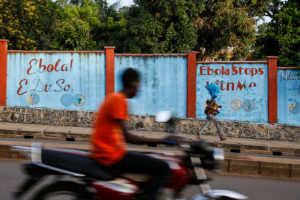
The U.S. government will not extend Temporary Protected Status for citizens of Liberia, Guinea and Sierra Leone. The TPS status granted because of the past Ebola outbreak will terminate on May 21. That means thousands of people from Liberia, Guinea, and Sierra Leone must leave the United States unless they have acquired a different immigration status.
Temporary Protected Status (TPS) allows people from certain countries to remain in the United States and to get temporary work permits due to an emergency situation in their home countries. The Secretary of Homeland Security issues the TPS determination, and can renew or terminate the status. As John Keller, executive director of the Immigrant Law Center of Minnesota, explained in a 2016 MinnPost interview:
“Well, think of TPS as this magic protection that happens because of circumstances that occur in your home country. If you happen to be outside of your country and in the U.S. when a massive earthquake hits, like in Haiti, the U.S. is saying, it would be inhumane to send Haitians back to a country that has been destroyed. So, any Haitians in the U.S. on the date of the hurricane, will now be protected.”
Currently, TPS applies to 13 countries. That status will end for Liberia, Guinea, and Sierra Leone on May 21.
Haitian TPS will end on July 22. Haitian TPS was granted after the 2010 earthquake in Haiti, which has still not rebuilt and recovered from the earthquake.
Haiti was also hit by Hurricane Matthew last October, and by a cholera epidemic attributed to UN peacekeepers that began in 2010. The cholera epidemic has killed nearly 10,000 people and infected more than 770,000 Haitians.
However, on April 20, an internal memorandum signaled that the Trump administration may refuse to renew Haitian TPS. According to Al Jazeera:
“]T]he acting director of US Citizen and Immigration Services (USCIS), a Department of Homeland Security agency, recommended that the status not be renewed in an internal letter, USA Today reported last week.
“In the letter, James McCament, the USCIS acting director, concluded that while Haiti has not completely recovered from the earthquake, it was stable enough to end the status, the news organisation reported.
“John Kelly, the Homeland Security secretary, will make the final determination. He had not made a decision as of April 21, a spokesperson told Al Jazeera English.”
Time is running out for TPS holders from Liberia, Guinea, and Sierra Leone. On April 28, an ILCM Facebook post urged them to seek help immediately:
“Dear friends from Liberia, Guinea, and Sierra Leone in MN who currently have (or know someone with) TPS based on the Ebola-based protections. USCIS announced in the fall of 2016 that TPS would end on May 20, 2017. This notice confirms that it will in fact end in three weeks. If you had a status prior to TPS – you may be able to return to that status. If you did not – you are expected to depart from the U.S. We encourage everyone to consult with an experienced immigration attorney ASAP to determine if there is any other possible protections for you. DO NOT DELAY. If you are low-income please call ILCM at 1-800-223-1368 or 651-641-1011 for more information. You can also find immigration attorneys in MN and nationwide at www.aila.org“
Getting to know new Minnesotans – Part Two: Where do they come from?
From 2010-2014, the biggest numbers of new Minnesota immigrants came from three countries: India (2,000 annual arrivals), Mexico (1,600 arrivals), and China (1,500 arrivals). A total of about 24,000 immigrants from other countries arrived each year.[1]
But that’s just the newest arrivals. Overall, immigrants from Mexico make up the biggest group of foreign-born Minnesotans – some 67,000, according to the 2015 American Community Survey figures.[2] Are Hmong Minnesotans the next biggest group? Not according to the official figures, which don’t count Hmong as a single group, but rather use nationality, which divides the Hmong Minnesotans between Laos and Thailand.
Immigrants make up 13.5 percent of the national population but only 8.3 percent of Minnesota’s population in 2015. The “Getting to know new Minnesotans” series explores some of Minnesota’s immigration picture. Click here for Part One: How many immigrants?
Here’s how the Minnesota State Demographic Center sums it up:
In 2014, the largest groups of foreign-born Minnesotans were born in Mexico (about 66,000); India (29,000); Laos, including Hmong (28,000); Somalia (26,000); Ethiopia (18,000); China, excluding Hong Kong and Taiwan (18,000); Thailand, including Hmong (17,000); and Vietnam (17,000). These estimates do not include U.S.-born children of these immigrants. They also likely underestimate the size of our immigrant populations because trust and language issues reduce response rates to Census surveys.[3]
Where are the Somali Minnesotans in this count? The U.S. Census figures don’t show Somalis at all in 2014, counting them in with “other East African” countries.[4] In 2015, the census figures show Somalis separately, reporting about 84,000 in the entire United States, with 25,000 of that number in Minnesota.[5] As noted in the state demographer’s report, the reported number is likely lower than the actual number.
Sometimes people get confused about who immigrants are. For example, many people think all people of Latino ancestry are immigrants. That’s not accurate. In Minnesota 105,000 people of Latino origin are foreign-born, but 177,000 are U.S.-born. Most Latinos in Minnesota were born in this country so they are not immigrants.[6] Even among those who were born outside the country, many are now U.S. citizens.
Not all Latino or Hispanic immigrants come from Mexico. Some 46,000 immigrants in Minnesota come from other Latin American countries. Guatemala, El Salvador, and Ecuador lead the way, with between five and six thousand immigrant Minnesotans from each country. About 3,000 Minnesota immigrants come from Colombia and another 3,000 from Honduras.
Many other countries have large immigrant populations in Minnesota. Those with more than 5,000 immigrants, according to 2015 American Community Survey data, are:[7]
- China (about16,000)
- Ethiopia (about 16,000)
- Korea (about 14,000)
- Liberia (about 12,000)
- Canada (about 12,000)
- Philippines (about 8,000)
- Kenya (about 8,000)
- Germany (about 6,000)
- Russia (about 6,000)
- Burma (about 6,000)
- Nigeria (about 6,000)
[1] Minnesota on the Move: Migration Patterns and Implications, Minnesota State Demographic Center, January 2015, p. 11 <https://mn.gov/admin/assets/mn-on-the-move-migration-report-msdc-jan2015_tcm36-219517.pdf>
[2] U.S. Census Bureau, 2011-2015 American Community Survey 5-Year Estimates <https://factfinder.census.gov/faces/tableservices/jsf/pages/productview.xhtml?src=bkmk >
[3] Minnesota State Demographic Center, Immigration & Language, consulted 4/25/17. < https://mn.gov/admin/demography/data-by-topic/immigration-language/>
[4] U.S. Census Bureau, 2011-2015 American Community Survey 5-Year Estimates <https://factfinder.census.gov/faces/tableservices/jsf/pages/productview.xhtml?src=bkmk >
[5] U.S. Census Bureau, 2011-2015 American Community Survey 5-Year Estimates <https://factfinder.census.gov/faces/tableservices/jsf/pages/productview.xhtml?src=bkmk >
[6] State Immigration Profiles – Minnesota. Migration Policy Institute. Consulted 4/25/17. <http://www.migrationpolicy.org/data/state-profiles/state/demographics/MN>
[7] U.S. Census Bureau, 2011-2015 American Community Survey 5-Year Estimates <https://factfinder.census.gov/faces/tableservices/jsf/pages/productview.xhtml?src=bkmk >
ILCM’s #LatinxStrong and Hispanics in Philanthropy
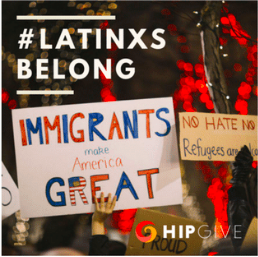
“Across the Americas, immigrant communities are under attack.” That’s why Hispanics in Philanthropy launched its new campaign, #LATINXSBELONG BECAUSE #WEALLBELONG on May 1. The Immigrant Law Center of Minnesota (ILCM) is part of the campaign, with #LatinxStrong, an appeal to raise $30,000 to support its work of representing immigrant families, advocating for just immigration policies, and educating immigrants and the larger community.
Hispanics in Philanthropy says, “the increasing need is stretching critical resources thinner than ever” for nonprofits working with immigrant communities, and that, “From defending their legal status to providing direct services, these nonprofits fill critical gaps.”
In immigration cases, unlike criminal cases, immigrants do not have a right to a public defender. That’s why ILCM legal services to immigrants are so important. According to the American Immigration Council:
“Whereas in the criminal justice system, all defendants facing even one day in jail are provided an attorney if they cannot afford one, immigrants facing deportation generally do not have that opportunity. …Yet, in every immigration case, the government is represented by a trained attorney who can argue for deportation, regardless of whether the immigrant is represented….
“The data show that immigrants with legal counsel were more likely to be released from detention, avoid being removed in absentia, and seek and obtain immigration relief.”
Representation in immigration cases is crucial, and ILCM works every day to represent immigrants with legal matters from from fighting deportation to becoming a naturalized citizen. On its #LatinxStrong page, ILCM writes:
“All of our offices have a waitlist for services, and, especially in this dangerous climate, where ICE arrests have increased by 80 percent in and around Minnesota, we need more legal staff to meet the increasing needs – for representation, for advocacy, and for education.”
As the campaign launched on May 1, ILCM was the only Midwestern project seeking support through #LATINXSBELONG and Hispanics in Philanthropy.