Immigrants in the News: Aida Simon recognized for saving life of 4-year-old in Worthington

“It kind of humbled me — not only just finding the child but seeing the community come together, just running around to save a child’s life,” she said. “It just made me feel like ‘Wow, what a community we have here.’”

Aida Simon, an Eritrean immigrant and long-time ILCM supporter, was honored with a Lifesaving Award from the Worthington Police Department. The Worthington Daily Globe reported on her Lifesaving Award from the Worthington Police Department and the city of Worthington.

When 4-year old Simon Legesse, was reportedly missing, Aida Simon, parent engagement specialist at the Nobles County Integration Collaborative, immediately went to Legesse’s mother to support and serve as an interpreter. Simon Legesse had been dropped off near his home at Knollwood apartments by the school bus like usual. Yet, as hours went by, Simon never came home.

Policemen, firefighters, co-workers, and community members all came out to help in the search for Simon Legesse.

“While officers searched the area, Simon noticed a rug tucked underneath a chair on the patio outside of the apartment. She felt something in her gut — an unshakable feeling that Legesse was there. When she walked outside to check, she found Legesse tucked under the rug, ending the search and saving his life.” 

Immigrants in the News: Yussuf Shafie of Burnsville named Outstanding Alumnus of the Year by Inver Hills Community College

As a Somali and practicing Muslim, Yussuf Shafie has made outstanding impacts in his community. Somali immigrant Yussuf Shafie came to Burnsville in 2000, and has achieved success as a business owner and a social worker. The Inver Hills News reported on Shafie being named Outstanding Alumnus of the Year. In an interview with him, Yussuf admitted, “I love having the chance to help others. You meet people where they are. Understanding the whole concept of social work is knowing how to be there for people in need.”

In 2014, while earning his Masters of Social Work at the U of M, Yussuf along with his sister, opened the first Somali restaurant, Tawakal, in the town of Bursnville. The following year, Yussuf founded the Alliance Wellness Center in Bloomington. The Alliance Wellness center focuses on, “offering multicultural care delivered by a multicultural team with a focus on mental health issues and addiction.” The center is focused on serving clients with East African backgrounds. As the first of its kind, the Alliance Wellness Center is innovative, and has helped provide services to under served groups.

Along with serving as executive director of the Alliance Wellness Center, Yussuf works at Howry Residential Services in Eagan, assisting with the daily living needs of vulnerable adult clients. On top of his  work as a direct support professional at Howry, Yussuf also serves as a social worker at Roosevelt High School providing counseling services to troubled students.


Restaurants Rising raises more than $30,000!

More than 40 Twin Cities restaurants and some bookstores and galleries joined together on March 15 to support the Immigrant Law Center of Minnesota. Donating a percentage of their sales, these small businesses raised more than $30,000.

The Facebook page for Restaurants Rising explained:

“With so many people in our community threatened by the divisive and discriminatory stance the new Trump administration has taken on immigration, many of us are looking for ways to stand up in support of Minnesota’s immigrant community.

“One of the groups standing up locally is the Immigrant Law Center of Minnesota (ILCM). ILCM provides legal representation for low-income immigrants and refugees and education and advocacy with diverse communities throughout Minnesota. They urgently need additional funds to help them prepare to defend against a significant increase in deportations and stand up for people caught up in the Muslim ban.”

ILCM Executive Director John Keller thanked Restaurants Rising for their effort and success:

“ILCM is extremely grateful for the overwhelming support for our work and the families and communities we serve. We have spoken widely to the immigrant and refugee community of how deep and wide Minnesota’s support and welcome is – and Restaurants Rising’s leadership and generosity is among the clearest and most visible representations yet. Muchisimas Gracias!”

Individual support for ILCM is growing, too, with the number of sustaining donors rising from three to 55. You can join them with a monthly, quarterly, annual or one-time donation.

Want to support the small businesses that support the Immigrant Law Center of Minnesota? Click on over to Restaurants Rising to see the list, and also check out the host organization for the event, Minnesota Small Businesses United.


One life at a time: Four-year-old girl reunited with family through ILCM’s work

Four-year-old Mushkaad Dahir made headlines around the world when President Trump’s first travel ban stopped her at an airport in Uganda. She had been separated from her mother, Samira Dahir, since she was five months old. Samira was forced to leave Mushkaad behind in order to get her two older daughters to safety in the United States.

Like her mother and sisters, Mushkaad is a refugee. Shortly after she was born, her mother and sisters got their refugee visas. That process takes years, and the outcome is always uncertain. Now the new baby would have to begin the application process.

Could Samira Dahir give up the visas just granted to her and Mushkaad’s sisters? That would have put Mueahib, now 8, and Mumtaz, now 7, at risk: first, through spending more years in the refugee camp where Samira Dahar lived after leaving Somalia in 2005, and then, because they might never get another chance at a visa.

Samira Dahir made the difficult choice to leave baby Mushkaad behind with a family friend while she and her other daughters moved to Minneapolis. She was told that getting a visa would take less than a year. Instead, it took more than three years.

In January, Mushkaad was finally approved to join her family and immigrate to the U.S. as a refugee. She arrived at Kampala airport in Uganda – just in time to be turned away by Trump’s travel ban. Wearing a new dress, hair braided and hands decorated in henna, Mushkaad was left sobbing in the airport as she spoke to her mother, half a world away, on the phone. An empty room and welcome gifts at the family’s apartment in Minneapolis remained untouched.

That’s where the Immigrant Law Center of Minnesota (ILCM) came into the picture.

“This four-year-old child poses no threat to anyone in the United States,” said ILCM Executive Director John Keller. “She is one of thousands of refugees and immigrants who have gone through extensive vetting only to have their lives upended by this unconstitutional executive order.”

ILCM joined forces with some of the most experienced immigration experts and litigators in the state, marshalling legal resources to reunite Mushkaad with her mother and sisters. Their efforts paid off on February 2 when Mushkaad, who was finally cleared for travel, arrived at the Minneapolis-St. Paul International Airport.

The Immigrant Law Center of Minnesota teamed up with the University of Minnesota Law School’s Center for New Americans, Mid-Minnesota Legal Aid, University of St. Thomas School of Law, pro bono lawyers at Dorsey & Whitney LLP, the American Civil Liberties Union of Minnesota, Advocates for Human Rights, Lutheran Immigration and Refugee Service, Lutheran Social Service of Minnesota offices on two continents, and Minnesota Senators Amy Klobuchar and Al Franken to find a pathway to humanitarian consideration. Al Franken’s office had been working to bring Mushkaad to Minnesota since June. Finally, after countless dead-ends, nothing short of intervention by the highest-level immigration officials in the Trump administration was able to reunite Mushkaad and her mother.

“If this is what it took to get clearance for a 4-year-old refugee girl, we are horrified to consider what awaits thousands of other children and families,” said Keller on the day she arrived in Minnesota.

Since ILCM and partners first fought this unconstitutional executive order, it has been overturned by federal courts, and when the President issued a second travel ban, that ban, too, was blocked by the courts. However, one part of his executive order remains in effect: the number of refugees admitted to the United States in this fiscal year was cut from 110,000 to 50,000.


For more information:

If you like us, then really like us – on Facebook

Every day, news posts on the Immigrant Law Center of Minnesota Facebook feed link to the latest immigration news and provide comprehensive information, as well as updates on ILCM events and initiatives.

When Immigration and Customs Enforcement (ICE) released a shame and blame list of “non-cooperating” jurisdictions on March 21, our Facebook page linked to the announcement of the list and of Hennepin County’s place on it from the Star Tribune, criticism of the list by sheriffs around the country from AP, analysis of the reasons behind the ICE list from The Hill, our own summary of the “shame game,” and a New York Times editorial denouncing the list.

When social media reports of Department of Homeland Security agents riding Twin Cities light rail appeared on March 22, ILCM Executive Director John Keller tracked down the facts and posted accurate information on Facebook within hours.

Want to know when the helpline is open, or where you can hear John Keller speaking? Again, Facebook is the best place to find out – we post updates on our programs and flyers informing you how to access our services.

It’s easy – just go to our page and click “Like.” Then watch your Facebook feed from the latest on immigration and ILCM.


Winning health care for DACA’s new Minnesotans

In 2012, President Obama instituted the Deferred Action for Childhood Arrivals (DACA) executive order, which granted Deferred Action legal status to young immigrants who were long-term American residents. Known as “Dreamers,” these young people were brought to the United States as children. Under the executive order, those who were 15-30 years could apply for DACA legal status and thereby get access to driver’s licenses, legal work authorization, financial aid for education programs, and, importantly, relief from the constant fear of deportation.

In Minnesota today, some 6,000 children and young adults have applied for and received DACA status. They can work and go to school without fear of immediate deportation. But what about health care?

For two years, ILCM negotiated with the Commissioner of Human Services and the Governor’s office to confirm MinnesotaCare eligibility for DACA recipients who are income-eligible. Although Dreamers were never legally blocked from health care, health care was not extended to them either, and the state’s unwritten policy was to withhold health care from the DACA recipients. The work of ILCM, Health Access MN, Mid Minnesota Legal Aid, Stinson and Leonard law firm, TakeAction, Navigate, Voices for Racial Justice, and Waite House, and courageous storytelling by affected DACA recipients over the last two years, culminated in the state’s important, life-changing acknowledgement of Dreamers’ eligibility for health care. In December 2016, people with Deferred Action legal status exercised their eligibility for MinnesotaCare for the first time.

Eligibility was just the first step. Next, DACA recipients needed to be informed that they are eligible and assisted in applying. At the end of December, ILCM mailed letters to our entire network of past and current DACA recipients.

In the first few weeks of 2017, we also worked with HealthAccess MNsure Navigators to provide a how-to webinar to educate applicants on this important new opportunity and a MinnesotaCare enrollment clinic with healthcare Navigators from four organizations participating. Ten applications for MinnesotaCare were submitted through this clinic, and as of the middle of January, 27 applications had been received by the state from Dreamers. The webinar continues to be available via our Facebook page.

Despite uncertainty regarding the future of DACA, ILCM is proud to remain among the Dreamers’ strongest, most far-reaching advocates in Minnesota.


Take Action with the Immigrant Law Center of Minnesota

Beginning in January, the number of phone calls and contacts to Congress and legislators reached new heights as U.S. residents voiced their opposition to Trump administration initiatives. Many ILCM supporters responded to our Action Alerts by contacting Congress regarding refugee resettlement and the Trump anti-immigrant agenda.

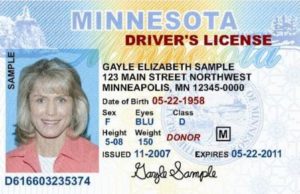
Minnesotans also contacted their legislature and Governor Mark Dayton regarding Real ID. The House passed a Real ID bill that banned drivers’ licenses for unauthorized immigrants; the Senate voted down the bill because of the ban. A “clean” Real ID bill, meaning a bill without the drivers’ license ban, was passed March 30th with the support of Governor Mark Dayton.

You can subscribe to ILCM Action Alerts to follow this issue and more in the local and national world of immigration policy. When you subscribe, you get a notice about each new issue that ILCM highlights, and a suggested letter, which you can email through the website or print and send via U.S. mail.


Trump plays shame game with local law enforcement

UPDATED Friday, 3/24/17

On Monday, March 20, U.S. Immigration and Customs Enforcement (ICE) released the first weekly report required by President Trump’s executive order regarding immigration. The report lists all the jurisdictions that didn’t hold prisoners past their release date so that ICE could decide whether or not to pick them up, a process called an ICE detainer.

The Trump administration’s shame-and-blame tactic calls the cities or counties “non-cooperative jurisdictions.” The U.S. Conference of Mayors says that’s not accurate:

“It lists jurisdictions as non-compliant that are currently complying with federal law, the City of New Orleans among them.

“It ignores the Constitutional requirement under the 4th Amendment that there be a warrant for a jurisdiction to hold someone who would otherwise be released.

“It ignores due process in the more than half of the cases cited in which the individual has been charged with – but not convicted of – a crime.

Moreover, the mayors’ conference says, the statements coming from ICE promote “the false narrative that immigrants are criminals when studies have shown that the incidence of criminality is less among immigrants than among the native-born population.”

An immigration detainer is a request from ICE to a local law enforcement agency to keep an immigrant in jail past the time of their court-ordered release. A detainer is an administrative request from ICE, without any judicial determination or warrant. A detainer can issue for someone arrested for not paying parking tickets or for arrested for murder. Los Angeles Mayor Eric Garcetti criticized ICE detainer practice in an article in The Hill:

“[We] coordinate and collaborate with our federal law enforcement all the time, we just require it be done in a constitutional manner with due process, and with a court issued warrant,” said Garcetti.

Garcetti said the abuse of detainers is a problem that precedes the Trump administration. In past administrations, he said, detainers were supposed to be used only for serious criminals.

“When we looked at the detainer requests, they were not often focused on any serious crimes,” he said.

The focus on detainers and “non-cooperation” is part of the Trump administration’s attack on “sanctuary cities.” Any jurisdiction that requires a warrant or judicial order, rather than a detainer, runs the risk of losing federal funding and also of being blamed for any criminal activity subsequently committed by an immigrant who is released on bail, or after serving a sentence, or even after being found not guilty of all charges.

Hennepin County was named in the first report as a non-cooperating jurisdiction. According to MPR, the sheriff’s office notifies ICE before releasing “someone ICE is interested in,” but ICE picks up no more than one-third of the people it initially says it wants. MPR reports:

“James Franklin, executive director of the Minnesota Sheriffs’ Association, said Hennepin County is doing things by the book, following legal advice given to county sheriffs.

“We cannot hold for ICE unless it is a detainer that has judicial authorization,” Franklin said.”

According to the ICE report, Hennepin County declined two detainers during the week of January 28-February 3.

UPDATE 3/24/17: MPR News reported this morning that the ICE report is wrong: both people named in the detainers were taken into custody by ICE upon release. Sheriff Rich Stank said the department does not comply with detainers because they are illegal, but the department does advise ICE of the time of release. He furnished photos to MPR, showing ICE officials taking custody of each individual.

ICE said numbers of detainers will rise dramatically across the country, due to a new policy:

“ICE field offices have been instructed to resume issuing detainers on all removable aliens n a LEA’s custody regardless of prior non-cooperation. As a result, the number of issued detainers will increase over the next several reporting periods.” [Emphasis in original]

“Removable aliens” is a category that new Trump administration policies have made dramatically larger. Many immigrants charged with minor crimes as well as immigrants who have been convicted of crimes and served sentences in the past are now included in this category. The category includes unauthorized immigrants as well as some immigrants with valid visas and some permanent legal residents.

In a March 22 editorial, the New York Times called the detainer policy and report, “President Trump’s Reckless Shame Game.”  Taking aim at the report, the New York Times wrote:

“The idea is to name and shame these agencies, accusing them of recklessly loosing dangerous aliens onto the streets. …

“The accusation is dishonest. The report is a sham. And the claim of protecting public safety is ridiculous — dangerously so.

“When local authorities decline to honor ICE detainers, they can have any number of good reasons for doing so. A likely one is the Fourth Amendment, which forbids imprisoning anyone without justification.”

For more information:

Homeland Security on Twin Cities light rail: What’s up with that?

Mike Griffin’s Twitter post asked what Homeland Security was doing checking tickets on the Green Line in Minneapolis

Department of Homeland Security officers rode Metro Transit trains on Wednesday, March 22, accompanying Metro Transit security. Their presence was quickly documented and questioned in social media, with Facebook and Twitter posts asking what they were doing and whether their presence had anything to do with immigration enforcement.

Responding to community concerns, the Immigrant Law Center of Minnesota posted on Facebook Wednesday afternoon:

“There have been concerns raised over Department of Homeland Security Agents on Metro Transit today. ILCM’s executive director has spoken with Chief John Harrington of the Metro Police and he asked us to reassure the immigrant community that these agents are not part of ICE. That they are not collaborating with ICE. And that they are from a different division of DHS that helps coordinate security in the event of a crisis. …

“Ha habido preocupaciones expresadas hoy sobre agentes del Departamento de Seguridad DHS en el transporte público Metro Transit. El director ejecutivo de ILCM ha hablado con el jefe de la policía de Metro, John Harrington y nos pidió tranquilizar a la comunidad inmigrante que estos agentes no son parte de ICE, ellos no colaboran con ICE y son de una división diferente de DHS que ayudan a coordinar la seguridad en caso de crisis. Para una declaración completa acerca de la colaboración, su historia y su propósito consulte la declaración de Metro Transit abajo.”

The DHS presence came two days after DHS named Hennepin County as one of the “non-cooperative jurisdictions” in regard to immigration enforcement. The designation came in the first of what will be weekly reports mandated by President Trump.

According to Metro Transit, it’s all routine and has nothing to do with immigration. The DHS presence is part of the Visible Intermodal Prevention and Response (VIPR). Metro Transit has a web page titled “Why are Metro Transit officers occasionally accompanied by DHS officers?” The page says the DHS presence will help to “work with those agencies more seamlessly in the event of an actual emergency or during times of heightened security like the upcoming Super Bowl.”

As Bob Collins wrote in his MPR News Cut blog, “Far from bringing a sense of security, the officers appear to have caused some discomfort for passengers.”

Building a wall (or talking about building a wall)

The feds posted contract notices on Friday, March 17, for a wall on the Mexican border. Initial proposals are due by March 29. The  contract notice says the wall has to be “aesthetically pleasing” on the north side, and specifies heights of 18 to 30 feet, along with the capacity to withstand “sledgehammer, car jack, pick axe, chisel, battery operated impact tools, battery operated cutting tools, Oxy/acetylene torch or other similar hand-held tools.”

The president also asked Congress to allocate somewhere between $2.6 and $4 billion — but that’s just a start. The president says the wall will cost $12 billion, Congress thinks it will be closer to $15 billion, and an internal Department of Homeland Security report says $21 billion. While the president originally said Mexico would pay for the wall, Mexico says it absolutely will not pay. That leaves U.S. taxpayers footing the bill, if Congress appropriates the money.

Money is not the only problem:

Cronkite News: The Tohono O’odham reservation has land and members on both sides of the border, and is among the Native American tribal nations opposing the wall. “Tribal nations are sovereign governments and the federal government ‘must practice consultation to keep a good relationship with the Native leaders,’ said Rachel Rose Starks, senior researcher at Udall Center for Public Policy at the University of Arizona.”

Texas Observer: Many U.S. landowners don’t want the wall on their property – and don’t like the low prices the government is offering, or the threat of eminent domain to force them to sell.

Valley Central: And then there’s the potential danger to already-endangered species, like ocelots, and to national and state parks and wildlife refuges, and the possibility of a wall causing flooding.

Los Angeles Times: Mexico-based Cemex, one of the world’s largest suppliers of building materials, says it will not participate in construction of the border wall.

For more information: